


- Afhalen na 1 uur in een winkel met voorraad
- Gratis thuislevering in België vanaf € 30
- Ruim aanbod met 7 miljoen producten
- Afhalen na 1 uur in een winkel met voorraad
- Gratis thuislevering in België vanaf € 30
- Ruim aanbod met 7 miljoen producten





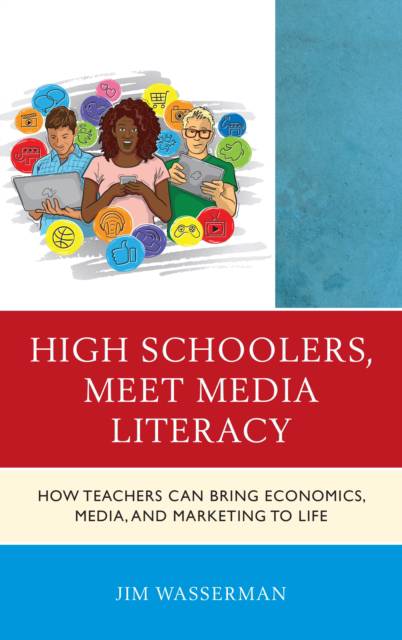
High Schoolers, Meet Media Literacy
How Teachers Can Bring Economics, Media, and Marketing to Life
Jim Wasserman
€ 169,95
+ 339 punten
Uitvoering
Omschrijving
High school students today are no longer insulated from the vicissitudes of messaging/counter messaging in today's always available, always blaring media (coming into their cars, homes, and ears through ever-more personal devices), including the cross-accusations of "fake news" that leave true seekers of information spinning in circles. Young people are no longer "future consumers," as products they are not even old enough to buy are pitched to them, while groups with political agendas seek to make future voters already on their "team" before they first step into a voting booth. Fortunately, there is now a call for empowering teens with the knowledge and skills to decode such messaging so that they are no longer passive receptacles of messaging, but active participants in their own media processing. This is the field of media literacy.
Specificaties
Betrokkenen
- Auteur(s):
- Uitgeverij:
Inhoud
- Aantal bladzijden:
- 214
- Taal:
- Engels
- Reeks:
Eigenschappen
- Productcode (EAN):
- 9781475842203
- Verschijningsdatum:
- 18/06/2019
- Uitvoering:
- Hardcover
- Formaat:
- Genaaid
- Afmetingen:
- 152 mm x 229 mm
- Gewicht:
- 485 g


Alleen bij Standaard Boekhandel
+ 339 punten op je klantenkaart van Standaard Boekhandel
CADEAU

AANGERADEN


Beoordelingen
We publiceren alleen reviews die voldoen aan de voorwaarden voor reviews. Bekijk onze voorwaarden voor reviews.