


- Afhalen na 1 uur in een winkel met voorraad
- Gratis thuislevering in België vanaf € 30
- Ruim aanbod met 7 miljoen producten
- Afhalen na 1 uur in een winkel met voorraad
- Gratis thuislevering in België vanaf € 30
- Ruim aanbod met 7 miljoen producten





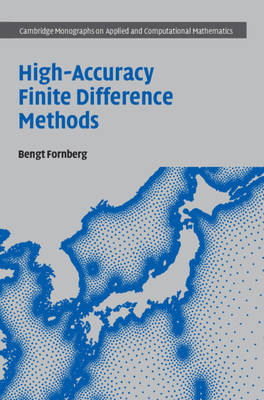
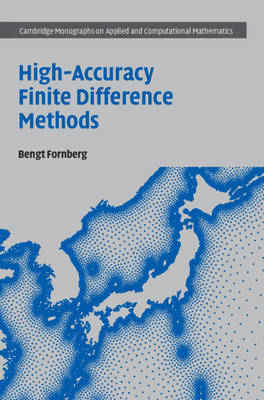
High-Accuracy Finite Difference Methods
Bengt Fornberg
€ 144,45
+ 288 punten
Omschrijving
Scientific computing plays a critically important role in almost all areas of engineering, modeling, and forecasting. The method of finite differences (FD) is a classical tool that is still rapidly evolving, with several key developments barely yet in the literature. Other key aspects of the method, in particular those to do with computations that require high accuracy, often 'fall through the cracks' in many treatises. Bengt Fornberg addresses that failing in this book, which adopts a practical perspective right across the field and is aimed at graduate students, scientists, and educators seeking a follow-up to more typical curriculum-oriented textbooks. The coverage extends from generating FD formulas and applying them to solving ordinary and partial differential equations, to numerical integration, evaluation of infinite sums, approximation of fractional derivatives, and computations in the complex plane.
Specificaties
Betrokkenen
- Auteur(s):
- Uitgeverij:
Inhoud
- Aantal bladzijden:
- 246
- Taal:
- Engels
- Reeks:
- Reeksnummer:
- nr. 42
Eigenschappen
- Productcode (EAN):
- 9781009566537
- Verschijningsdatum:
- 5/06/2025
- Uitvoering:
- Hardcover
- Formaat:
- Genaaid
- Afmetingen:
- 152 mm x 229 mm
- Gewicht:
- 498 g


Alleen bij Standaard Boekhandel
+ 288 punten op je klantenkaart van Standaard Boekhandel
Cadeau

AANGERADEN


Beoordelingen
We publiceren alleen reviews die voldoen aan de voorwaarden voor reviews. Bekijk onze voorwaarden voor reviews.