


- Afhalen na 1 uur in een winkel met voorraad
- Gratis thuislevering in België vanaf € 30
- Ruim aanbod met 7 miljoen producten
- Afhalen na 1 uur in een winkel met voorraad
- Gratis thuislevering in België vanaf € 30
- Ruim aanbod met 7 miljoen producten





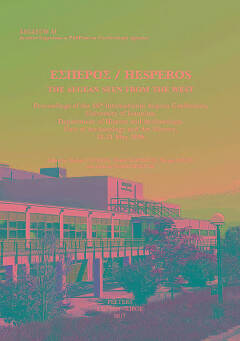
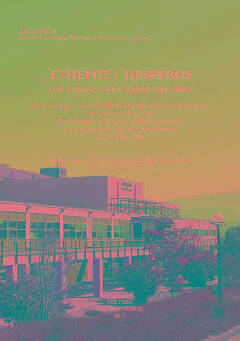
Hesperos. the Aegean Seen from the West
Proceedings of the 16th International Aegean Conference
Hardcover | Engels | Aegaeum (Annales d'archéologie égéenne de l'Université de Liège et UT-PASP) | nr. 41
€ 145,00
+ 290 punten
Eenvoudig bestellen
Veilig betalen


Gratis thuislevering vanaf € 30 (via bpost)
Gratis levering in je Standaard Boekhandel
Omschrijving
The 16th International Aegean Conference/Rencontre egeenne internationale encompasses all the geographical regions west of the Aegean (Western Mainland Greece, the Ionian islands and the Adriatic, Italy, Sicily, Malta, Sardinia, Corsica and the Balearic islands), giving prominence to those focal points and traits of the local civilizations which interact with their Aegean counterparts of the 3rd and 2nd millennium BC, not excluding their Neolithic background. Some of the issues for which Hesperos opens the floor to discussion are the nature of Mycenaean presence in Iberia, the spread of the early technology of bronze across the Mediterranean, the expansion of phenomena connected with the Cetina "culture", the local productions and the Mediterranean trade network of goods, such as the industry of amber, glass and murex, the distribution of tumuli and their social implications as monuments for the local elites, the lack of local manufacture of Italo-Mycenaean pottery in Sicily, the nodal role of the Balkans in a "connecting cultures" process, the documentation of Cycladic elements as far away as the Ionian islands, and the aspects of the metallurgical koine across the LBA Adriatic and the Aegean, not neglecting the examination of "traditional" questions, such as the nature of Mycenaean imports in Italy, the spread of matt-painted pottery in the SW Balkans and the degree of "Mycenaeanization" of Epirus.
Specificaties
Betrokkenen
- Uitgeverij:
Inhoud
- Aantal bladzijden:
- 558
- Taal:
- Engels
- Reeks:
- Reeksnummer:
- nr. 41
Eigenschappen
- Productcode (EAN):
- 9789042935624
- Verschijningsdatum:
- 4/12/2017
- Uitvoering:
- Hardcover
- Formaat:
- Genaaid
- Afmetingen:
- 211 mm x 297 mm
- Gewicht:
- 2358 g

Alleen bij Standaard Boekhandel
+ 290 punten op je klantenkaart van Standaard Boekhandel
CADEAU

AANGERADEN


Beoordelingen
We publiceren alleen reviews die voldoen aan de voorwaarden voor reviews. Bekijk onze voorwaarden voor reviews.