


- Afhalen na 1 uur in een winkel met voorraad
- Gratis thuislevering in België vanaf € 30
- Ruim aanbod met 7 miljoen producten
- Afhalen na 1 uur in een winkel met voorraad
- Gratis thuislevering in België vanaf € 30
- Ruim aanbod met 7 miljoen producten





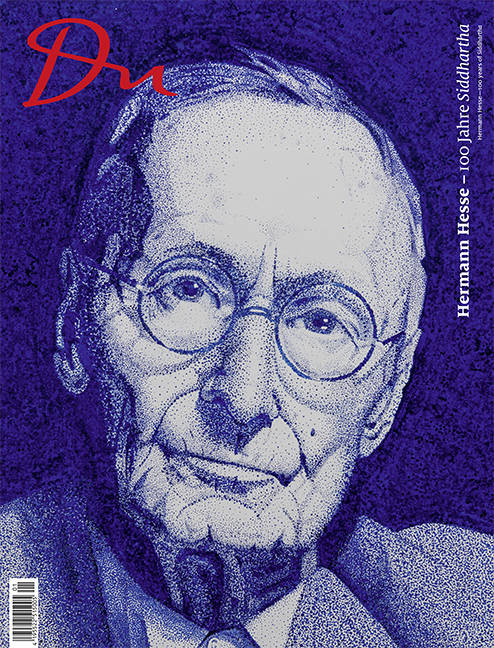
Hermann Hesse - 100 Jahre Siddhartha/100 years of Siddhartha
€ 14,95
+ 29 punten
Omschrijving
100 years ago, Hermann Hesse published his novel Siddhartha. The book would have fallen into oblivion after the author's death in 1962, if the hippies of the Flower Power movement in San Francisco had not declared Hesse one of their gurus. They gravitated to the mythologies of India and so Siddhartha came to be their revered text.Hesse embarked upon a search for truth at an early stage, studying the great traditions - and he was also motivated by his deep inner conflicts. Like Buddha, he tried to free himself of his inner tensions through radical ascetism. But to no avail - it involved too much compulsion, too much repression of pleasure and will. So he turned to Lao-tzu. He taught that theworld need not be renounced, rather it should be understood in its polarities of Yin and Yang, as Karl-Josef Kuschel, President of the Hesse Society writes in this issue of Du. The result was a fundamental shift in Hesse's thought, away from Buddhist renunciation of the world and towards Taoist world affirmation - the seeds that would produce Siddhartha.
Specificaties
Betrokkenen
- Uitgeverij:
Inhoud
- Taal:
- Engels, Duits
- Reeks:
- Reeksnummer:
- nr. 912
Eigenschappen
- Productcode (EAN):
- 9783907315118
- Verschijningsdatum:
- 24/02/2022
- Uitvoering:
- Paperback
- Afmetingen:
- 239 mm x 7 mm
- Gewicht:
- 518 g

Alleen bij Standaard Boekhandel
+ 29 punten op je klantenkaart van Standaard Boekhandel
Cadeau

AANGERADEN


Beoordelingen
We publiceren alleen reviews die voldoen aan de voorwaarden voor reviews. Bekijk onze voorwaarden voor reviews.