


- Afhalen na 1 uur in een winkel met voorraad
- Gratis thuislevering in België vanaf € 30
- Ruim aanbod met 7 miljoen producten
- Afhalen na 1 uur in een winkel met voorraad
- Gratis thuislevering in België vanaf € 30
- Ruim aanbod met 7 miljoen producten





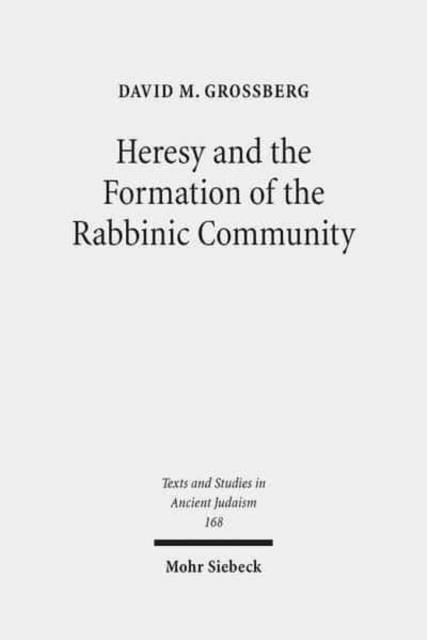
Heresy and the Formation of the Rabbinic Community
David M Grossberg
€ 156,95
+ 313 punten
Omschrijving
Between the first and sixth centuries C.E., a group of sages that scholars refer to as the rabbinic community systematized their ideas about Judaism in works such as the Mishnah and the Talmud. David M. Grossberg offers a new approach to thinking about this community's formation. Rather than seeking an occasion of origin, he examines the gradual development of the idea of an authorized rabbinic collective. The classical rabbinic texts imagine a diverse setting of Sadducees, Pharisees, sinners, and sectarians interacting in complex and changing ways with pious sages, teachers, and judges. Yet this representation aligns only vaguely with the social reality in which these ancient sages actually lived and operated. The author contends that these texts' primary aim was not to describe real rabbinic opponents but to create and enforce boundaries between rabbis and others and within the emerging rabbinic movement.
Specificaties
Betrokkenen
- Auteur(s):
- Uitgeverij:
Inhoud
- Aantal bladzijden:
- 277
- Taal:
- Engels
- Reeks:
- Reeksnummer:
- nr. 168
Eigenschappen
- Productcode (EAN):
- 9783161551475
- Verschijningsdatum:
- 1/06/2017
- Uitvoering:
- Hardcover
- Formaat:
- Genaaid
- Afmetingen:
- 150 mm x 231 mm
- Gewicht:
- 544 g


Alleen bij Standaard Boekhandel
+ 313 punten op je klantenkaart van Standaard Boekhandel
Cadeau

AANGERADEN


Beoordelingen
We publiceren alleen reviews die voldoen aan de voorwaarden voor reviews. Bekijk onze voorwaarden voor reviews.