



Je cadeautjes zeker op tijd in huis hebben voor de feestdagen? Kom langs in onze winkels en vind het perfecte geschenk!
- Afhalen na 1 uur in een winkel met voorraad
- Gratis thuislevering in België vanaf € 30
- Ruim aanbod met 7 miljoen producten
Je cadeautjes zeker op tijd in huis hebben voor de feestdagen? Kom langs in onze winkels en vind het perfecte geschenk!
- Afhalen na 1 uur in een winkel met voorraad
- Gratis thuislevering in België vanaf € 30
- Ruim aanbod met 7 miljoen producten





Omschrijving
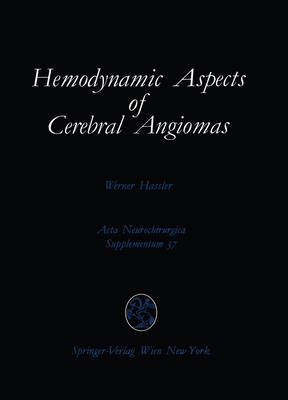
Up to date, the treatment of arteriovenous racemose angiomas of the brain remains unsatisfactory. Intraoperative hemorrhages, post-embolizational or postoperative deficits depending on the site and size of the A VM as well as inoperability of rare angioma types have promoted the technical improvement of diagnostic and therapeutic approaches. Nevertheless, some pathophysiological problems of A VM hemodynamics have not been solved. Many angiographical studies, observations during embolization and operation, dopplersonographical and other perfusion measurements provided some insight. Sufficient animal models have yet to be developed in order to elucidate the pathophysiological mechanisms. This monograph describes A V fistula models in cats and rats, both conventional and newly developed, which allow a better comparison with human cerebral angiomas than previous ones. The most important result is that the model of the breakthrough of arterial pressure waves into the capillaries following a failure of cerebrovascular regulation cannot be confirmed. Rather, according to the findings in precapillary vessels presented here, the regulation functions normally so that a breakdown of regulation cannot be responsible for global brain edema often seen after removal of angiomas. The regulation was demonstrated using different methods, most important of which being the CO response of 2 brain vessels to varying CO contents of the inhaled air. Angiographical, dopplersonographical and 2 perioperative dopplersonographical as well as intraoperative measurements of flow and pressure have been applied.
Specificaties
Betrokkenen
- Auteur(s):
- Vertaler(s):
- Uitgeverij:
Inhoud
- Aantal bladzijden:
- 137
- Taal:
- Engels
- Reeks:
- Reeksnummer:
- nr. 37
Eigenschappen
- Productcode (EAN):
- 9783211819708
- Verschijningsdatum:
- 30/12/1986
- Uitvoering:
- Paperback
- Afmetingen:
- 207 mm x 277 mm
- Gewicht:
- 450 g


Alleen bij Standaard Boekhandel
+ 213 punten op je klantenkaart van Standaard Boekhandel
CADEAU


Beoordelingen
We publiceren alleen reviews die voldoen aan de voorwaarden voor reviews. Bekijk onze voorwaarden voor reviews.