


- Afhalen na 1 uur in een winkel met voorraad
- Gratis thuislevering in België vanaf € 30
- Ruim aanbod met 7 miljoen producten
- Afhalen na 1 uur in een winkel met voorraad
- Gratis thuislevering in België vanaf € 30
- Ruim aanbod met 7 miljoen producten





€ 98,45
+ 196 punten
Uitvoering
Omschrijving
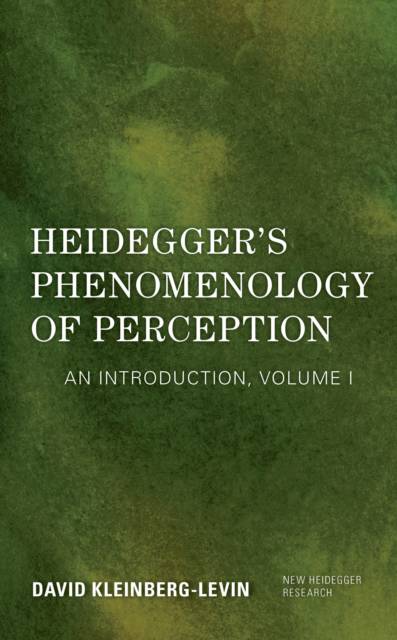
This important new book offers an introduction to Heidegger's phenomenology of perception, interpreting and explaining five key words, 'Sein', 'Dasein', 'Ereignis', 'Lichtung', and 'Geschick'. David Kleinberg-Levin argues that, besides preparing the ground for a major critique of metaphysics and the Western world, Heidegger's phenomenology of perception lays the groundwork for understanding perception--in particular, seeing and hearing, as capacities the historical character of which is capable of overcoming and significantly ameliorating the most menacing, most devastating features of the Western world that Heidegger subjected to critique. He proposes that the development of these capacities is not only a question of learning certain skills, but also a question of learning new character and that Heidegger's critique of the Western world suggests ways in which we might learn and develop new, more sensitive, poetic and mindful ways of relating to the perceived world.
Specificaties
Betrokkenen
- Auteur(s):
- Uitgeverij:
Inhoud
- Aantal bladzijden:
- 340
- Taal:
- Engels
- Reeks:
Eigenschappen
- Productcode (EAN):
- 9781786612120
- Verschijningsdatum:
- 21/10/2019
- Uitvoering:
- Paperback
- Formaat:
- Trade paperback (VS)
- Afmetingen:
- 152 mm x 229 mm
- Gewicht:
- 498 g


Alleen bij Standaard Boekhandel
+ 196 punten op je klantenkaart van Standaard Boekhandel
Cadeau

AANGERADEN


Beoordelingen
We publiceren alleen reviews die voldoen aan de voorwaarden voor reviews. Bekijk onze voorwaarden voor reviews.