


- Afhalen na 1 uur in een winkel met voorraad
- Gratis thuislevering in België vanaf € 30
- Ruim aanbod met 7 miljoen producten
- Afhalen na 1 uur in een winkel met voorraad
- Gratis thuislevering in België vanaf € 30
- Ruim aanbod met 7 miljoen producten





€ 125,45
+ 250 punten
Uitvoering
Omschrijving
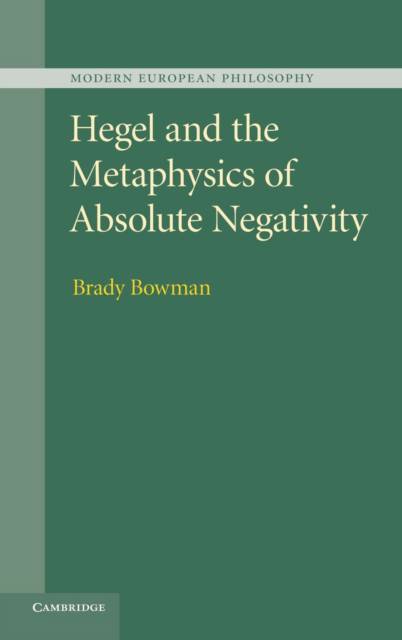
Hegel's doctrines of absolute negativity and 'the Concept' are among his most original contributions to philosophy and they constitute the systematic core of dialectical thought. Brady Bowman explores the interrelations between these doctrines, their implications for Hegel's critical understanding of classical logic and ontology, natural science and mathematics as forms of 'finite cognition', and their role in developing a positive, 'speculative' account of consciousness and its place in nature. As a means to this end, Bowman also re-examines Hegel's relations to Kant and pre-Kantian rationalism, and to key post-Kantian figures such as Jacobi, Fichte and Schelling. His book draws from the breadth of Hegel's writings to affirm a robustly metaphysical reading of the Hegelian project, and will be of great interest to students of Hegel and of German Idealism more generally.
Specificaties
Betrokkenen
- Auteur(s):
- Uitgeverij:
Inhoud
- Aantal bladzijden:
- 298
- Taal:
- Engels
Eigenschappen
- Productcode (EAN):
- 9781107033597
- Verschijningsdatum:
- 14/02/2013
- Uitvoering:
- Hardcover
- Formaat:
- Genaaid
- Afmetingen:
- 150 mm x 231 mm
- Gewicht:
- 566 g


Alleen bij Standaard Boekhandel
+ 250 punten op je klantenkaart van Standaard Boekhandel
CADEAU

AANGERADEN


Beoordelingen
We publiceren alleen reviews die voldoen aan de voorwaarden voor reviews. Bekijk onze voorwaarden voor reviews.