


- Afhalen na 1 uur in een winkel met voorraad
- Gratis thuislevering in België vanaf € 30
- Ruim aanbod met 7 miljoen producten
- Afhalen na 1 uur in een winkel met voorraad
- Gratis thuislevering in België vanaf € 30
- Ruim aanbod met 7 miljoen producten





€ 24,45
+ 48 punten
Uitvoering
Omschrijving
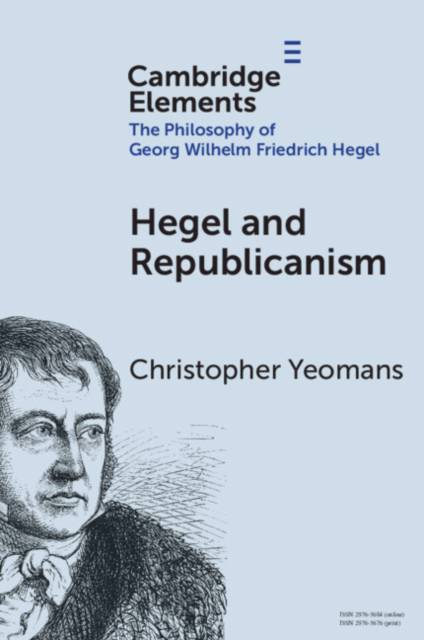
This Element is about the relationship between the political thought of the German philosopher G. W. F. Hegel (1770-1831) and a tradition of political thinking known as republicanism that traces its roots at least to 15th century Florence and perhaps further back to Aristotle. Throughout, we will be investigating this relationship along two dimensions. First, we will be asking whether it advances our understanding of Hegel's thought to consider him to be a republican, and if so, in what way and to what extent. The point here is not to assimilate Hegel to a cause or a label, but to see whether the individual outlines of Hegel's thought might be brought into focus by adopting the lens of republicanism. Second, we will be considering whether Hegel's thought offers criticism of various other forms of republicanism and how we might evaluate that criticism.
Specificaties
Betrokkenen
- Auteur(s):
- Uitgeverij:
Inhoud
- Aantal bladzijden:
- 74
- Taal:
- Engels
- Reeks:
Eigenschappen
- Productcode (EAN):
- 9781009705332
- Verschijningsdatum:
- 23/04/2026
- Uitvoering:
- Paperback
- Formaat:
- Trade paperback (VS)
- Afmetingen:
- 152 mm x 229 mm
- Gewicht:
- 108 g


Alleen bij Standaard Boekhandel
+ 48 punten op je klantenkaart van Standaard Boekhandel
Cadeau

AANGERADEN


Beoordelingen
We publiceren alleen reviews die voldoen aan de voorwaarden voor reviews. Bekijk onze voorwaarden voor reviews.