


- Afhalen na 1 uur in een winkel met voorraad
- Gratis thuislevering in België vanaf € 30
- Ruim aanbod met 7 miljoen producten
- Afhalen na 1 uur in een winkel met voorraad
- Gratis thuislevering in België vanaf € 30
- Ruim aanbod met 7 miljoen producten





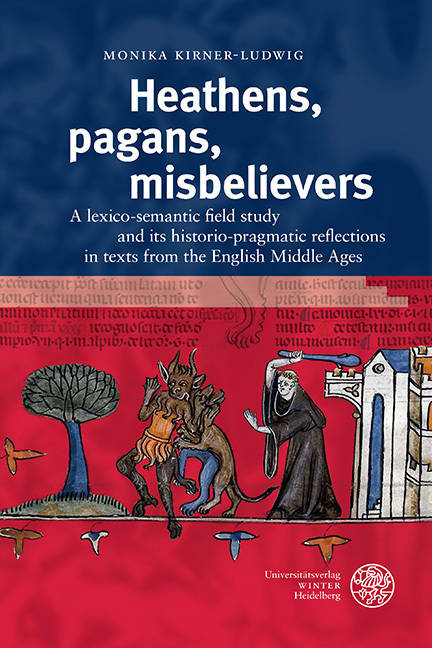
Heathens, Pagans, Misbelievers
A Lexico-Semantic Field Study and Its Historio-Pragmatic Reflections in Texts from the English Middle Ages
Monika Kirner-Ludwig
€ 185,45
+ 370 punten
Omschrijving
This monograph is devoted to the lexico-semantic field representing the conceptual category of the MISBELIEVER as defined by Christians in medieval England. The approach to this complex field combines structural as well as historio-pragmatic tools to shed light on the question in which ways the lexico-semantic inventory was expanded and differentiated over the period from ca. 700 to 1600 AD under the impact of contact scenarios with heterogenous non-Christian groups. As two representative out-groups of perceived misbelievers, the Scandinavian Vikings and the Saracens have been chosen to undergo a particular contrastive diachronic investigation. The corpus composed for the comprehensive etymological analyses of relevant vocabulary does not only cover Old and Middle English materials, but additionally takes into account medieval Latin and Old/Middle French attestations as influencing factors on the conceptual field of the MISBELIEVER and its lexical representations.
Specificaties
Betrokkenen
- Auteur(s):
- Uitgeverij:
Inhoud
- Aantal bladzijden:
- 619
- Taal:
- Engels
- Reeks:
- Reeksnummer:
- nr. 31
Eigenschappen
- Productcode (EAN):
- 9783825364311
- Verschijningsdatum:
- 1/07/2015
- Uitvoering:
- Hardcover
- Formaat:
- Genaaid
- Afmetingen:
- 165 mm x 244 mm
- Gewicht:
- 607 g


Alleen bij Standaard Boekhandel
+ 370 punten op je klantenkaart van Standaard Boekhandel
CADEAU


Beoordelingen
We publiceren alleen reviews die voldoen aan de voorwaarden voor reviews. Bekijk onze voorwaarden voor reviews.