


- Afhalen na 1 uur in een winkel met voorraad
- Gratis thuislevering in België vanaf € 30
- Ruim aanbod met 7 miljoen producten
- Afhalen na 1 uur in een winkel met voorraad
- Gratis thuislevering in België vanaf € 30
- Ruim aanbod met 7 miljoen producten





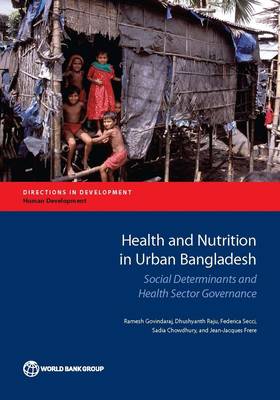
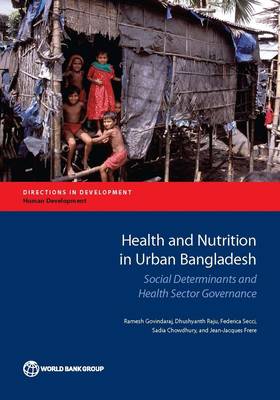
Health and Nutrition in Urban Bangladesh
Social Determinants and Health Sector Governance
Ramesh Govindaraj, Dhushyanth Raju, Federica Secci, Sadia Chowdhury, Jean-Jacques Frere
€ 64,45
+ 128 punten
Omschrijving
Urbanization is occurring at a rapid pace in Bangladesh, accompanied by the proliferation of slum settlements, whose residents have special health needs given the adverse social, economic, and public environmental conditions they face. Over the past 45 years, the country's health and nutrition policies and programs have focused largely on rural health services. Consequently, equitable access of urban populations--particularly the urban poor--to quality health and nutrition services has emerged as a major development issue. However, the knowledge base on urban health and nutrition in Bangladesh remains weak. To address the knowledge gap, Health and Nutrition in Urban Bangladesh: Social Determinants and Health Sector Governance examines the health and nutrition challenges in urban Bangladesh--looking at socioeconomic determinants in general and at health sector governance in particular. Using a mixed methods approach, the study identifies critical areas such as financing, regulation, service delivery, and public environmental health, among others that require policy attention. The study also proposes specific actions within and outside the health sector to address the issues, providing guidance on their sequencing and the specific responsibilities of government agencies and other actors. This study should be useful to policy makers and practitioners working on urban health and nutrition issues in Bangladesh and in other low- and middle-income countries.
Specificaties
Betrokkenen
- Auteur(s):
- Uitgeverij:
Inhoud
- Aantal bladzijden:
- 128
- Taal:
- Engels
- Reeks:
Eigenschappen
- Productcode (EAN):
- 9781464811999
- Verschijningsdatum:
- 21/02/2018
- Uitvoering:
- Paperback
- Formaat:
- Trade paperback (VS)
- Afmetingen:
- 178 mm x 254 mm
- Gewicht:
- 235 g


Alleen bij Standaard Boekhandel
+ 128 punten op je klantenkaart van Standaard Boekhandel
Cadeau

AANGERADEN


Beoordelingen
We publiceren alleen reviews die voldoen aan de voorwaarden voor reviews. Bekijk onze voorwaarden voor reviews.