


- Afhalen na 1 uur in een winkel met voorraad
- Gratis thuislevering in België vanaf € 30
- Ruim aanbod met 7 miljoen producten
- Afhalen na 1 uur in een winkel met voorraad
- Gratis thuislevering in België vanaf € 30
- Ruim aanbod met 7 miljoen producten




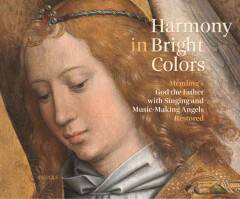
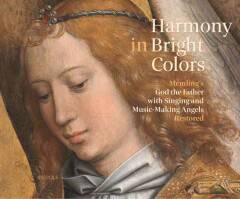
Harmony in Bright Colours
Memling's God the Father with Singing and Music-Making Angels Restored
Lizet Klaassen
€ 106,00
+ 212 punten
Omschrijving
Hans Memling's God the Father with Singing and Music-making Angels formed the upper register of an enormous polyptych painted for the Benedictine monastery of Santa Maria la Real in Najera, Spain. The three large panel paintings are undoubtedly among the most monumental works of early Netherlandish painting. Since 1895 they have belonged to the collection of the Royal Museum of Fine Arts Antwerp (KMSKA), where a team of conservators and scholars have devoted themselves in recent years to their complex conservation. To mark the completion of this project, the KMSKA organized a symposium in March 2017 in cooperation with the University of Antwerp. This latest volume in the Me Fecit series publishes the contributions presented on that occasion. Their wide-ranging themes include the commissioning and iconography of the panels, their acquisition by the museum, the depicted vestments and what the work has to tell us about fifteenth-century musical practice. Close attention is paid to technical aspects such as the materials and the painting technique used for the panels, Memling's underdrawing, the frames, and the conservation treatment - not least the oxalate-containing layer that posed the greatest challenge. There is a musical aspect to the project too: precise replicas have been made of the depicted instruments, which were then used to perform fifteenth-century compositions with playing techniques inferred from the paintings. The book features contributions by Maryan Ainsworth, Wim Becu, Till-Holger Borchert, Bart Fransen, Ingrid Goddeeris, Catherine Higgitt, Lizet Klaassen, Louise Longneaux, Karel Moens, Lisa Monnas, Keith Polk, Marie Postec, Marika Spring and Geert Van der Snickt.
Specificaties
Betrokkenen
- Auteur(s):
- Uitgeverij:
Inhoud
- Aantal bladzijden:
- 287
- Taal:
- Engels
- Reeks:
- Reeksnummer:
- nr. 12
Eigenschappen
- Productcode (EAN):
- 9782503580289
- Verschijningsdatum:
- 22/04/2021
- Uitvoering:
- Hardcover
- Formaat:
- Genaaid
- Afmetingen:
- 307 mm x 244 mm
- Gewicht:
- 1950 g


Alleen bij Standaard Boekhandel
+ 212 punten op je klantenkaart van Standaard Boekhandel
Cadeau

AANGERADEN


Beoordelingen
We publiceren alleen reviews die voldoen aan de voorwaarden voor reviews. Bekijk onze voorwaarden voor reviews.