


- Afhalen na 1 uur in een winkel met voorraad
- Gratis thuislevering in België vanaf € 30
- Ruim aanbod met 7 miljoen producten
- Afhalen na 1 uur in een winkel met voorraad
- Gratis thuislevering in België vanaf € 30
- Ruim aanbod met 7 miljoen producten





€ 44,45
+ 88 punten
Omschrijving
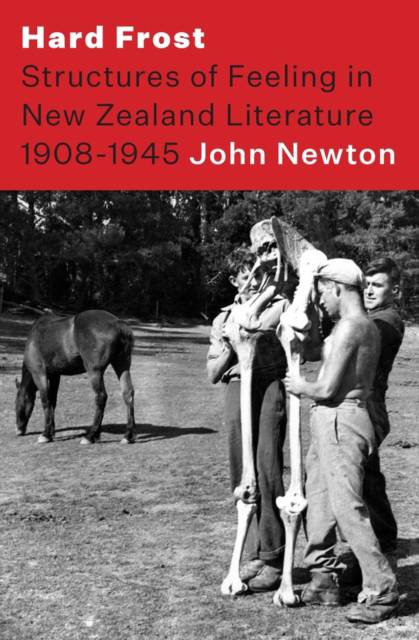
How did New Zealand writers make nationalism out of modernism? What did the process owe to a revolution in sexuality? And what did this mean for writing by women as the 1920s gave way to the 1930s? Writing as a poet as well as a historian, as a critic of ideology, and as a self-confessed fan of the nationalist legacy, John Newton tackles these intriguing questions with warmth, insight and critical precision. The first part of an ambitious trilogy, Hard Frost shows us a fresh way of looking at New Zealand literature of the 20th century. It details the pleasures of essential texts. It also roams far and wide through their contexts: from mountaineering to moa excavation, from beauty pageants to the history of psychoanalysis. In readings of such foundational authors as Mansfield, Sargeson, Curnow and Hyde, Hard Frost proposes that our literary history is not just a story about books but a forgotten history of feelings. We know these writers well, yet they have so much still to tell us. This lucidly argued work will change the way we understand them.
Specificaties
Betrokkenen
- Auteur(s):
- Uitgeverij:
Inhoud
- Aantal bladzijden:
- 370
- Taal:
- Engels
Eigenschappen
- Productcode (EAN):
- 9781776561629
- Verschijningsdatum:
- 1/07/2018
- Uitvoering:
- Paperback
- Formaat:
- Trade paperback (VS)
- Afmetingen:
- 137 mm x 208 mm
- Gewicht:
- 703 g


Alleen bij Standaard Boekhandel
+ 88 punten op je klantenkaart van Standaard Boekhandel
Cadeau

AANGERADEN


Beoordelingen
We publiceren alleen reviews die voldoen aan de voorwaarden voor reviews. Bekijk onze voorwaarden voor reviews.