


- Afhalen na 1 uur in een winkel met voorraad
- Gratis thuislevering in België vanaf € 30
- Ruim aanbod met 7 miljoen producten
- Afhalen na 1 uur in een winkel met voorraad
- Gratis thuislevering in België vanaf € 30
- Ruim aanbod met 7 miljoen producten





€ 34,28
+ 68 punten
Omschrijving
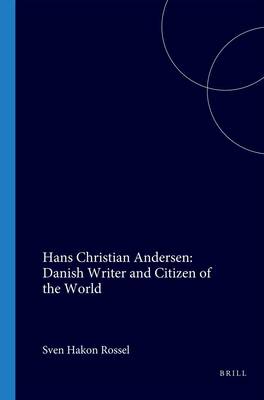
Hans Christian Andersen is indisputably the best known of all Scandinavian writers, his tales and stories having been translated probably into more languages than any other work except the Bible. He is also one of the greatest travelers of nineteenth-century belles lettres and few were the major European cities, capitals, and countries he did not visit, many of them several times: Vienna, Berlin, Dresden, Leipzig, Weimar, Paris, and London. He met and became friends with some of the most outstanding representatives of the European artistic community: Charles Dickens, Victor Hugo, Alexandre Dumas père, Franz Grillparzer, Heinrich Heine, the Brothers Grimm, Wilhelm von Kaulbach, Franz Liszt, Felix Mendelssohn-Bartholdy, Clara and Robert Schumann, to mention a few.
Andersen was the first notable Danish writer of proletarian origin, and even though he was never able to overcome his personal traumas, he became extremely successful in climbing the social ladder receiving invitations wherever he went from nobility and royalty and being showered with recognition and decorations. He read aloud to and was feted by Maximilian II of Bavaria, Friedrich Wilhelm IV of Prussia, Grand Duchess Sophia of Austria, and Friedrich August II of Saxony. Even though he also was a frequent visitor at the Danish court Andersen always felt more appreciated abroad.
In spite of Andersen's status as a world-renowned writer, no critical treatment has thus far discussed him as a key figure in European contemporary culture and a cosmopolitan personality. The contributors to the present volume -- all of whom are acclaimed Andersen scholars -- have made extensive use of the vast material available in Andersen's diaries, almanacs, autobiographies, and letters. Most of this material, now made available in English for the first time, allows a new Andersen to emerge, different from the traditional portrayal of him as a content and happy storyteller -- a myth indeed! To the contrary, all contributors of this volume discuss his complexity, the traumas and disillusionments of a professional artist constantly struggling to maintain his position and incessantly worried about running out of inspiration.
This volume -- besides presenting biographical information in an international perspective -- focuses on Andersen's fascinating psychological make-up, his taste in music, literature, and the pictorial arts, the contemporary critical reception of his work, and explores his creative universe in a more general sense including his poetry, novels, plays, and travelogues. Andersen's overall artistic achievements are viewed in the context of world literature.
Andersen was the first notable Danish writer of proletarian origin, and even though he was never able to overcome his personal traumas, he became extremely successful in climbing the social ladder receiving invitations wherever he went from nobility and royalty and being showered with recognition and decorations. He read aloud to and was feted by Maximilian II of Bavaria, Friedrich Wilhelm IV of Prussia, Grand Duchess Sophia of Austria, and Friedrich August II of Saxony. Even though he also was a frequent visitor at the Danish court Andersen always felt more appreciated abroad.
In spite of Andersen's status as a world-renowned writer, no critical treatment has thus far discussed him as a key figure in European contemporary culture and a cosmopolitan personality. The contributors to the present volume -- all of whom are acclaimed Andersen scholars -- have made extensive use of the vast material available in Andersen's diaries, almanacs, autobiographies, and letters. Most of this material, now made available in English for the first time, allows a new Andersen to emerge, different from the traditional portrayal of him as a content and happy storyteller -- a myth indeed! To the contrary, all contributors of this volume discuss his complexity, the traumas and disillusionments of a professional artist constantly struggling to maintain his position and incessantly worried about running out of inspiration.
This volume -- besides presenting biographical information in an international perspective -- focuses on Andersen's fascinating psychological make-up, his taste in music, literature, and the pictorial arts, the contemporary critical reception of his work, and explores his creative universe in a more general sense including his poetry, novels, plays, and travelogues. Andersen's overall artistic achievements are viewed in the context of world literature.
Specificaties
Betrokkenen
- Auteur(s):
- Uitgeverij:
Inhoud
- Aantal bladzijden:
- 294
- Taal:
- Engels
- Reeks:
- Reeksnummer:
- nr. 14
Eigenschappen
- Productcode (EAN):
- 9789051839487
- Verschijningsdatum:
- 1/01/1996
- Uitvoering:
- Paperback
- Formaat:
- Trade paperback (VS)
- Afmetingen:
- 170 mm x 240 mm


Alleen bij Standaard Boekhandel
+ 68 punten op je klantenkaart van Standaard Boekhandel
CADEAU

AANGERADEN


Beoordelingen
We publiceren alleen reviews die voldoen aan de voorwaarden voor reviews. Bekijk onze voorwaarden voor reviews.