


- Afhalen na 1 uur in een winkel met voorraad
- Gratis thuislevering in België vanaf € 30
- Ruim aanbod met 7 miljoen producten
- Afhalen na 1 uur in een winkel met voorraad
- Gratis thuislevering in België vanaf € 30
- Ruim aanbod met 7 miljoen producten





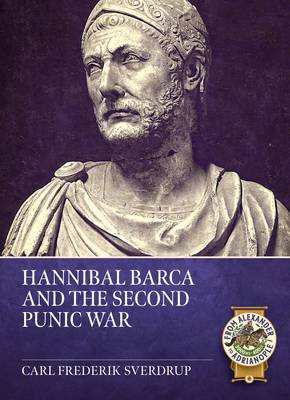
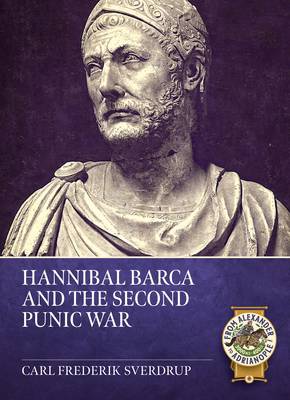
Hannibal Barca and the Second Punic War
Carl Fredrik Sverdrup
€ 48,95
+ 97 punten
Eenvoudig bestellen
Veilig betalen


Gratis thuislevering vanaf € 30 (via bpost)
Gratis levering in je Standaard Boekhandel
Omschrijving
Hannibal Barca and the Second Punic War reexamines the Second Punic War from the ground up. Instead of retelling set-piece battles, it reconstructs campaigns with numbers orders of battle, losses, and force generation and tests every claim against the primary sources. The result is a clear, evidence-led narrative from Iberia to Italy, Africa, and even Hannibal's post-war campaigning in the eastern Mediterranean.
Two convictions drive the work. First, that Rome's greatest military crisis can only be understood by quantifying the war: how many soldiers fought, where they were lost, and how fast either side could replace them. Second, that our main witness, Polybius brilliant but partisan toward the Scipios - must be read critically, not followed slavishly.
Together, these principles redefine Hannibal not as a tactician without a plan after Cannae, but as a commander who adapted his strategy under relentless numerical pressure.
New analyses shed light on the diffusion of the Macedonian phalanx and the emergence of the cohort legion; the use of reserves; the Battle of Tunis; Hannibal's actual Alpine attrition; new perspectives on Trebia and Cannae, Hannibal's post-Cannae strategy, Scipio Africanus' conquest of Iberia, Rome's two battles against the llergetes; and the Zama campaign from initial preparations to the final clash. Readers receive a testable framework - what probably happened, why, and how the commanders thought - rather than a narrative of inevitability. Hannibal Barca and the Second Punic War is a must-read for historians, serious enthusiasts, and anyone who wants to weigh the evidence themselves.
Two convictions drive the work. First, that Rome's greatest military crisis can only be understood by quantifying the war: how many soldiers fought, where they were lost, and how fast either side could replace them. Second, that our main witness, Polybius brilliant but partisan toward the Scipios - must be read critically, not followed slavishly.
Together, these principles redefine Hannibal not as a tactician without a plan after Cannae, but as a commander who adapted his strategy under relentless numerical pressure.
New analyses shed light on the diffusion of the Macedonian phalanx and the emergence of the cohort legion; the use of reserves; the Battle of Tunis; Hannibal's actual Alpine attrition; new perspectives on Trebia and Cannae, Hannibal's post-Cannae strategy, Scipio Africanus' conquest of Iberia, Rome's two battles against the llergetes; and the Zama campaign from initial preparations to the final clash. Readers receive a testable framework - what probably happened, why, and how the commanders thought - rather than a narrative of inevitability. Hannibal Barca and the Second Punic War is a must-read for historians, serious enthusiasts, and anyone who wants to weigh the evidence themselves.
Specificaties
Betrokkenen
- Auteur(s):
- Uitgeverij:
Inhoud
- Aantal bladzijden:
- 356
- Taal:
- Engels
- Reeks:
Eigenschappen
- Productcode (EAN):
- 9781806722648
- Verschijningsdatum:
- 15/12/2026
- Uitvoering:
- Paperback
- Formaat:
- Trade paperback (VS)
- Afmetingen:
- 180 mm x 249 mm


Alleen bij Standaard Boekhandel
+ 97 punten op je klantenkaart van Standaard Boekhandel
CADEAU

AANGERADEN


Beoordelingen
We publiceren alleen reviews die voldoen aan de voorwaarden voor reviews. Bekijk onze voorwaarden voor reviews.