


- Afhalen na 1 uur in een winkel met voorraad
- Gratis thuislevering in België vanaf € 30
- Ruim aanbod met 7 miljoen producten
- Afhalen na 1 uur in een winkel met voorraad
- Gratis thuislevering in België vanaf € 30
- Ruim aanbod met 7 miljoen producten





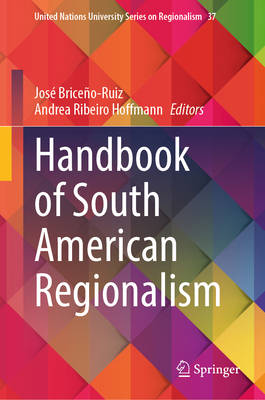
Handbook of South American Regionalism
€ 216,95
+ 433 punten
Omschrijving
This handbook provides a comprehensive overview of the processes of regional integration and cooperation in South America. It discusses the tradition of regional cooperation and various regional initiatives in South America from the 1960s onwards, despite cycles of progress and setbacks. It analyses country perspectives on regionalism by looking at some of the more active cooperation partners like Brazil, Argentina, Venezuela, Colombia, and also Mexico vis-à-vis South American regionalism. The handbook discusses conceptual topics such as the links between regionalism and globalization, the place of regionalism in South American foreign policies, the geopolitics of regional integration, and the institutional and legal dimensions of South American regional organizations. Finally, it covers the economic, political and social dimensions of South American regional processes.
The handbook fills a significant gap in the literature in English by taking a broad, multidimensional and multidisciplinary approach, and covering historical examples and theoretical and analytical perspectives. This is an innovative contribution to the study of South American regionalism, with contributions from leading experts based in South America and Latin American specialists from elsewhere.
Specificaties
Betrokkenen
- Uitgeverij:
Inhoud
- Aantal bladzijden:
- 565
- Taal:
- Engels
- Reeks:
- Reeksnummer:
- nr. 37
Eigenschappen
- Productcode (EAN):
- 9783032178633
- Verschijningsdatum:
- 5/06/2026
- Uitvoering:
- Hardcover
- Formaat:
- Genaaid
- Afmetingen:
- 155 mm x 235 mm

Alleen bij Standaard Boekhandel
+ 433 punten op je klantenkaart van Standaard Boekhandel
Cadeau

AANGERADEN


Beoordelingen
We publiceren alleen reviews die voldoen aan de voorwaarden voor reviews. Bekijk onze voorwaarden voor reviews.