


- Afhalen na 1 uur in een winkel met voorraad
- Gratis thuislevering in België vanaf € 30
- Ruim aanbod met 7 miljoen producten
- Afhalen na 1 uur in een winkel met voorraad
- Gratis thuislevering in België vanaf € 30
- Ruim aanbod met 7 miljoen producten





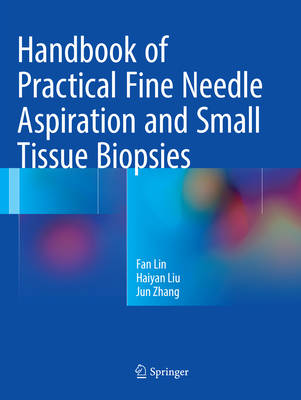
Handbook of Practical Fine Needle Aspiration and Small Tissue Biopsies
Fan Lin, Haiyan Liu, Jun Zhang
Paperback | Engels
€ 129,95
+ 259 punten
Uitvoering
Omschrijving
This handbook has been designed to provide a comprehensive and state-of-the art review and update of the major issues and challenges specific to fine needle aspiration (FNA) and small tissue core biopsies, which have emerged as primary modalities in establishing a definitive cancer diagnosis in the field of anatomic pathology, both in the U.S. and worldwide. Making an accurate diagnosis from a limited sample can be quite challenging yet crucial to patient care. The handbook, using the most current and evidence-based resources, will 1) emphasize a triple test (clinical, radiologic, and cytologic/histologic correlation); 2) stress the importance of cellblock preparation/small tissue core biopsy in modern cytopathology; 3) include over 100 diagnostic immunostaining panels/tables to address the utility and importance of ancillary studies; 4) incorporate relevant FISH and molecular tests into each chapter; and 5) summarize the pearls and pitfalls of FNA/small tissue biopsies at the beginning of each chapter. The book also includes highly practical presentations of typical case scenarios seen in an anatomic pathology laboratory. These are in the form of case presentations with step-by-step expert analysis. Sample cases include common but challenging situations, such as work-up of a tumor of unknown origin, evaluation of well-differentiated malignant tumors vs. benign/reactive lesions, identification of newly described tumor entities, and implementation of best practice in immunohistochemistry and molecular testing in a difficult case.
Handbook of Practical Fine Needle Aspiration and Small Tissue Biopsies is written by recognized experts in their fields and provides a unique and valuable resource in the field of cytopathology, both for those currently in training and for those already in clinical practice at various skill levels. It represents a new, comprehensive yet concise resource on these timely and critical topics.v>
Handbook of Practical Fine Needle Aspiration and Small Tissue Biopsies is written by recognized experts in their fields and provides a unique and valuable resource in the field of cytopathology, both for those currently in training and for those already in clinical practice at various skill levels. It represents a new, comprehensive yet concise resource on these timely and critical topics.v>
Specificaties
Betrokkenen
- Auteur(s):
- Uitgeverij:
Inhoud
- Aantal bladzijden:
- 496
- Taal:
- Engels
Eigenschappen
- Productcode (EAN):
- 9783319861500
- Verschijningsdatum:
- 10/08/2018
- Uitvoering:
- Paperback
- Afmetingen:
- 210 mm x 278 mm
- Gewicht:
- 1384 g


Alleen bij Standaard Boekhandel
+ 259 punten op je klantenkaart van Standaard Boekhandel
Cadeau

AANGERADEN


Beoordelingen
We publiceren alleen reviews die voldoen aan de voorwaarden voor reviews. Bekijk onze voorwaarden voor reviews.