


- Afhalen na 1 uur in een winkel met voorraad
- Gratis thuislevering in België vanaf € 30
- Ruim aanbod met 7 miljoen producten
- Afhalen na 1 uur in een winkel met voorraad
- Gratis thuislevering in België vanaf € 30
- Ruim aanbod met 7 miljoen producten





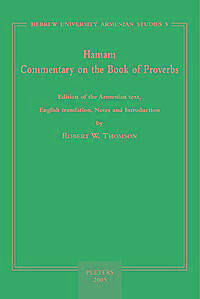
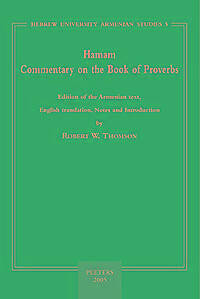
Hamam. Commentary on the Book of Proverbs
'Edition of the Armenian Text, English Translation, Notes and Introduction'
Rw Thomson
€ 40,00
+ 80 punten
Eenvoudig bestellen
Veilig betalen


Gratis thuislevering vanaf € 30 (via bpost)
Gratis levering in je Standaard Boekhandel
Omschrijving
This is the first translation of the late ninth-century Armenian commentary on the Book of Proverbs by Hamam, who is better known for his commentary on grammar. Armenian biblical exegesis is a little explored field, and this is one of the earliest surviving examples of the commentary genre. The text survives in a single manuscript, first published in Erevan in 1994. The Armenian text presented here is re-edited on the basis of a new reading of Matenadaran 1151. In the introduction Professor Thomson places this commentary in the context of Armenian theological tradition, contrasting Hamam's approach with the few surviving earlier Armenian biblical commentaries. He also notes the differences between Hamam and the previous major Greek and Syrian patristic commentators. The notes to the English translation elucidate textual and other problems. Two later Armenian commentaries on Proverbs exist, by Nerses of Lambron and Grigor of Tat'ev. Parallels and differences between the three texts are highlighted and discussed. This is a significant contribution to an aspect of Armenian theological tradition which has been little studied, but is now attracting increasing attention.
Specificaties
Betrokkenen
- Auteur(s):
- Uitgeverij:
Inhoud
- Aantal bladzijden:
- 307
- Taal:
- Engels
- Reeks:
- Reeksnummer:
- nr. 5
Eigenschappen
- Productcode (EAN):
- 9789042915831
- Verschijningsdatum:
- 29/03/2005
- Uitvoering:
- Paperback
- Formaat:
- Trade paperback (VS)
- Afmetingen:
- 161 mm x 243 mm
- Gewicht:
- 521 g


Alleen bij Standaard Boekhandel
+ 80 punten op je klantenkaart van Standaard Boekhandel
CADEAU

AANGERADEN


Beoordelingen
We publiceren alleen reviews die voldoen aan de voorwaarden voor reviews. Bekijk onze voorwaarden voor reviews.