


- Afhalen na 1 uur in een winkel met voorraad
- Gratis thuislevering in België vanaf € 30
- Ruim aanbod met 7 miljoen producten
- Afhalen na 1 uur in een winkel met voorraad
- Gratis thuislevering in België vanaf € 30
- Ruim aanbod met 7 miljoen producten





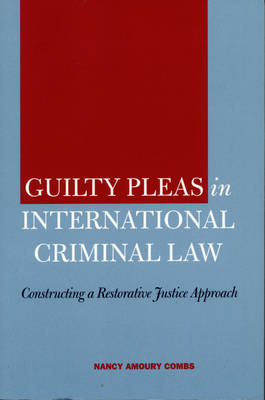
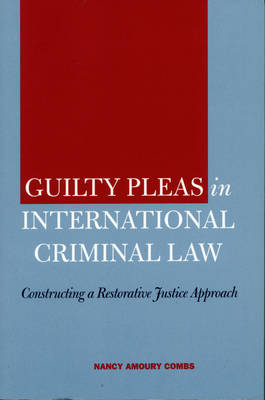
Guilty Pleas in International Criminal Law
Constructing a Restorative Justice Approach
Nancy Amoury Combs
Paperback | Engels
€ 48,95
+ 97 punten
Uitvoering
Omschrijving
International crimes, such as genocide and crimes against humanity, are complex and difficult to prove, so their prosecutions are costly and time-consuming. As a consequence, international tribunals and domestic bodies have recently made greater use of guilty pleas, many of which have been secured through plea bargaining. This book examines those guilty pleas and the methods used to obtain them, presenting analyses of practices in Sierra Leone, East Timor, Cambodia, Argentina, Bosnia, and Rwanda. Although current plea bargaining practices may be theoretically unsupportable and can give rise to severe victim dissatisfaction, the author argues that the practice is justified as a means of increasing the proportion of international offenders who can be prosecuted. She then incorporates principles drawn from the domestic practice of restorative justice to construct a model guilty plea system to be used for international crimes.
Specificaties
Betrokkenen
- Auteur(s):
- Uitgeverij:
Inhoud
- Aantal bladzijden:
- 384
- Taal:
- Engels
Eigenschappen
- Productcode (EAN):
- 9780804753524
- Verschijningsdatum:
- 20/11/2006
- Uitvoering:
- Paperback
- Formaat:
- Trade paperback (VS)
- Afmetingen:
- 153 mm x 229 mm
- Gewicht:
- 512 g


Alleen bij Standaard Boekhandel
+ 97 punten op je klantenkaart van Standaard Boekhandel
AANGERADEN


Beoordelingen
We publiceren alleen reviews die voldoen aan de voorwaarden voor reviews. Bekijk onze voorwaarden voor reviews.