


- Afhalen na 1 uur in een winkel met voorraad
- Gratis thuislevering in België vanaf € 30
- Ruim aanbod met 7 miljoen producten
- Afhalen na 1 uur in een winkel met voorraad
- Gratis thuislevering in België vanaf € 30
- Ruim aanbod met 7 miljoen producten





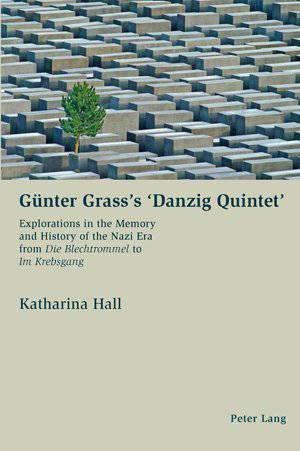
Guenter Grass's 'Danzig Quintet'
Explorations in the Memory and History of the Nazi Era from Die Blechtrommel to Im Krebsgang
Katharina Hall
Paperback | Engels
€ 53,45
+ 106 punten
Omschrijving
This study extends the long-established notion of Grass's 'Danzig Trilogy' to that of the 'Danzig Quintet' - a literary project of epic proportions, which explores the evolution of Germany's relationship to its Nazi past over a period of forty years.
The interlocking stories of Die Blechtrommel (1959), Katz und Maus (1961), Hundejahre (1963), örtlich betäubt (1969) and Im Krebsgang (2002) are mediated by the memory and language of seven first-person narrators. Using the dual conceptualisation of memory developed by Freud and Lacan - 'reliving' versus 'recollecting' the past - the author shows how these narrators' accounts assert the reality of the Holocaust (as well as German wartime suffering), while highlighting the reluctance of ordinary Germans to admit their involvement in the Nazi regime.
This delineation of the complex relationship of three generations to their history is deepened by the intertextual nature of the quintet. Using the theory of Peter Brooks, Umberto Eco, Shoshana Felman and Hayden White, the study explores how Grass's textual strategies encourage the reader to view all five works as one overarching narrative, while simultaneously avoiding any literary or historical closure. In the process, the study places each book in the context of its moment of production, and also considers the implications of Grass's belated admission, in August 2006, that he served with the Waffen-SS during the final months of World War Two.
The interlocking stories of Die Blechtrommel (1959), Katz und Maus (1961), Hundejahre (1963), örtlich betäubt (1969) and Im Krebsgang (2002) are mediated by the memory and language of seven first-person narrators. Using the dual conceptualisation of memory developed by Freud and Lacan - 'reliving' versus 'recollecting' the past - the author shows how these narrators' accounts assert the reality of the Holocaust (as well as German wartime suffering), while highlighting the reluctance of ordinary Germans to admit their involvement in the Nazi regime.
This delineation of the complex relationship of three generations to their history is deepened by the intertextual nature of the quintet. Using the theory of Peter Brooks, Umberto Eco, Shoshana Felman and Hayden White, the study explores how Grass's textual strategies encourage the reader to view all five works as one overarching narrative, while simultaneously avoiding any literary or historical closure. In the process, the study places each book in the context of its moment of production, and also considers the implications of Grass's belated admission, in August 2006, that he served with the Waffen-SS during the final months of World War Two.
Specificaties
Betrokkenen
- Auteur(s):
- Uitgeverij:
Inhoud
- Aantal bladzijden:
- 215
- Taal:
- Engels
Eigenschappen
- Productcode (EAN):
- 9783039109012
- Verschijningsdatum:
- 5/09/2007
- Uitvoering:
- Paperback
- Formaat:
- Trade paperback (VS)
- Afmetingen:
- 220 mm x 150 mm
- Gewicht:
- 329 g


Alleen bij Standaard Boekhandel
+ 106 punten op je klantenkaart van Standaard Boekhandel
Cadeau

AANGERADEN


Beoordelingen
We publiceren alleen reviews die voldoen aan de voorwaarden voor reviews. Bekijk onze voorwaarden voor reviews.