


- Afhalen na 1 uur in een winkel met voorraad
- Gratis thuislevering in België vanaf € 30
- Ruim aanbod met 7 miljoen producten
- Afhalen na 1 uur in een winkel met voorraad
- Gratis thuislevering in België vanaf € 30
- Ruim aanbod met 7 miljoen producten




€ 41,95
+ 83 punten
Uitvoering
Omschrijving
"...offer exceptional views of men and uniforms in the jungle, in the rear areas, and around Henderson Airfield." - Historical Miniatures Gaming Society
After the Pearl Harbor attack, the Japanese quickly captured Hong Kong, Guam, Wake Island, the Gilbert Islands and Rabaul. Japanese conquests of Malaya and Singapore, the Philippines, the Dutch East Indies and Burma followed into the spring of 1942. The Japanese juggernaut continued southwards with bases established at Salamaua and Lae in Northwest New Guinea followed by landings at Buna, Gona, and Sanananda along Papua's northern coast as a prelude to capture Port Moresby over the Owen Stanley Range to threaten Australia.
Despite a strategic American naval victory at the Battle of the Coral Sea and the sinking of four Japanese aircraft carriers at the Battle of Midway, the Allied situation remained desperate. Japanese naval troops invaded Tulagi Island and nearby islets off the coast of Florida Island on 3-4 May 1942 to construct a seaplane and naval base. Japan's goal of advancing through the southern Solomon Islands and beyond to New Caledonia, Fiji, and Samoa was to create a defensive buffer against an attack by a slowly-recovering American Navy and further isolate the Antipodes. In July 1942, Allied coast watchers and reconnaissance aircraft observed the construction of an airfield on Guadalcanal 20 miles to the south of Tulagi and Florida Islands.
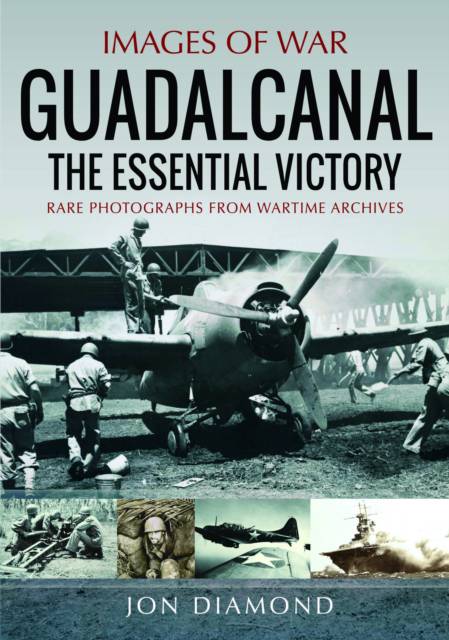
On 23 July 1942, American military leaders prioritized securing the South Pacific's lines of communication and halting the Japanese advance. The American invasion of Guadalcanal and Tulagi became operational entailing hellacious land, air and sea battles from 7 August 1942 to 3 February 1943. Guadalcanal became the essential struggle between Allied and Japanese forces, with the victor to eventually control the Solomon Islands in the South Pacific. The events of the campaign are expertly described here with contemporary images and detailed text.
After the Pearl Harbor attack, the Japanese quickly captured Hong Kong, Guam, Wake Island, the Gilbert Islands and Rabaul. Japanese conquests of Malaya and Singapore, the Philippines, the Dutch East Indies and Burma followed into the spring of 1942. The Japanese juggernaut continued southwards with bases established at Salamaua and Lae in Northwest New Guinea followed by landings at Buna, Gona, and Sanananda along Papua's northern coast as a prelude to capture Port Moresby over the Owen Stanley Range to threaten Australia.
Despite a strategic American naval victory at the Battle of the Coral Sea and the sinking of four Japanese aircraft carriers at the Battle of Midway, the Allied situation remained desperate. Japanese naval troops invaded Tulagi Island and nearby islets off the coast of Florida Island on 3-4 May 1942 to construct a seaplane and naval base. Japan's goal of advancing through the southern Solomon Islands and beyond to New Caledonia, Fiji, and Samoa was to create a defensive buffer against an attack by a slowly-recovering American Navy and further isolate the Antipodes. In July 1942, Allied coast watchers and reconnaissance aircraft observed the construction of an airfield on Guadalcanal 20 miles to the south of Tulagi and Florida Islands.
On 23 July 1942, American military leaders prioritized securing the South Pacific's lines of communication and halting the Japanese advance. The American invasion of Guadalcanal and Tulagi became operational entailing hellacious land, air and sea battles from 7 August 1942 to 3 February 1943. Guadalcanal became the essential struggle between Allied and Japanese forces, with the victor to eventually control the Solomon Islands in the South Pacific. The events of the campaign are expertly described here with contemporary images and detailed text.
Specificaties
Betrokkenen
- Auteur(s):
- Uitgeverij:
Inhoud
- Aantal bladzijden:
- 248
- Taal:
- Engels
- Reeks:
Eigenschappen
- Productcode (EAN):
- 9781036130961
- Verschijningsdatum:
- 15/01/2026
- Uitvoering:
- Paperback
- Formaat:
- Trade paperback (VS)
- Afmetingen:
- 172 mm x 244 mm
- Gewicht:
- 703 g



Alleen bij Standaard Boekhandel
+ 83 punten op je klantenkaart van Standaard Boekhandel
CADEAU

AANGERADEN


Beoordelingen
We publiceren alleen reviews die voldoen aan de voorwaarden voor reviews. Bekijk onze voorwaarden voor reviews.