


- Afhalen na 1 uur in een winkel met voorraad
- Gratis thuislevering in België vanaf € 30
- Ruim aanbod met 7 miljoen producten
- Afhalen na 1 uur in een winkel met voorraad
- Gratis thuislevering in België vanaf € 30
- Ruim aanbod met 7 miljoen producten





€ 145,19
+ 290 punten
Omschrijving
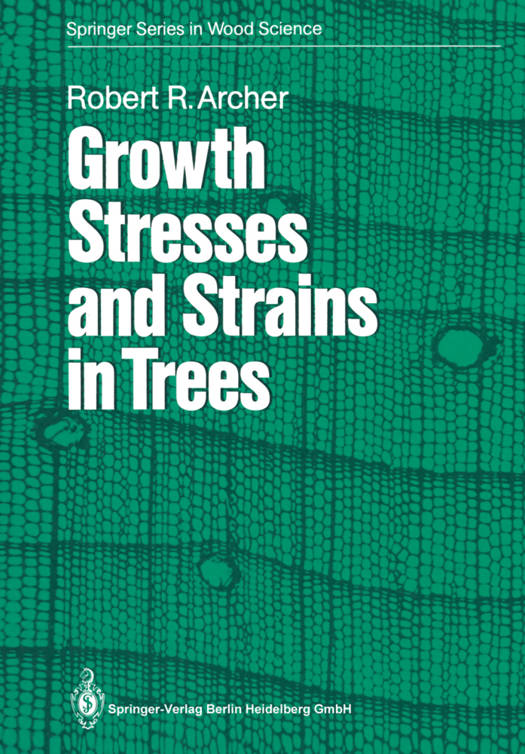
Although over 40 years have passed since Jacobs (1945) convincingly established the basic radial pattern of residual growth stress in growing trees, yet this phenomenon is still not widely appreciated in wood science and technology circles. This is in spite of the fact that the presence of these stresses of sizeable magnitudes has long been recognized as a primary cause of shakes and splits in logs as well as the warping of lumber sawn in the green condition. The presentation of the subject of growth stresses in trees presents some special problems due to the wide range of specialists who potentially might have an interest in the subject. For example, tree physiologists interested in questions such as the relation of mechanical stress to stem taper and the role of reaction wood and gravity forces in determining tree crown form encounter growth stress models. Silvi- culturists interested in the relation ofthinning practices to wood quality find that wood properties are correlated with growth stress levels which are in turn significantly changed by cutting practices. Wood techno- logists interested in the relation of residual growth stress gradients in green logs to the dimensional quality of sawn and seasoned lumber are forced to take a more quantitative approach to the effect of growth stresses than might have been the case in the past.
Specificaties
Betrokkenen
- Auteur(s):
- Uitgeverij:
Inhoud
- Aantal bladzijden:
- 240
- Taal:
- Engels
- Reeks:
- Reeksnummer:
- nr. 3
Eigenschappen
- Productcode (EAN):
- 9783662025130
- Verschijningsdatum:
- 12/12/2012
- Uitvoering:
- Paperback
- Formaat:
- Trade paperback (VS)
- Afmetingen:
- 170 mm x 244 mm
- Gewicht:
- 408 g


Alleen bij Standaard Boekhandel
+ 290 punten op je klantenkaart van Standaard Boekhandel
Wedstrijd


Beoordelingen
We publiceren alleen reviews die voldoen aan de voorwaarden voor reviews. Bekijk onze voorwaarden voor reviews.