



Je cadeautjes zeker op tijd in huis hebben voor de feestdagen? Kom langs in onze winkels en vind het perfecte geschenk!
- Afhalen na 1 uur in een winkel met voorraad
- Gratis thuislevering in België vanaf € 30
- Ruim aanbod met 7 miljoen producten
Je cadeautjes zeker op tijd in huis hebben voor de feestdagen? Kom langs in onze winkels en vind het perfecte geschenk!
- Afhalen na 1 uur in een winkel met voorraad
- Gratis thuislevering in België vanaf € 30
- Ruim aanbod met 7 miljoen producten





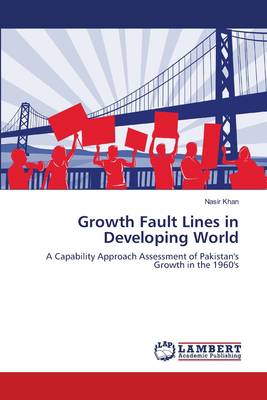
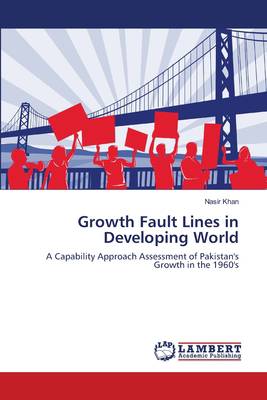
Growth Fault Lines in Developing World
A Capability Approach Assessment of Pakistan's Growth in the 1960's
Nasir Khan
Paperback | Engels
€ 74,45
+ 148 punten
Omschrijving
Developing countries have, by and large, failed to convert sporadic episodes of glorious growth into sustained development frameworks. The tremendous economic growth during the development decade of 1960's in Pakistan provides a good instantiation of this fact. The decade is known as development decade in the history of the country. However, the growth failed to mitigate miseries of the masses which ultimately led to momentous events at the turn of the decade. The ensuing circumstances at the end of the country's glorious development decade make it an appropriate case for assessment through an alternative development approach, outside the purely income centred measurements. Capability approach of Nobel laureate Amartya K. Sen is one such alternative evaluative framework which scores a definite advantage over traditional welfare measurements due to its vast informational space. Accordingly, the book attempts to assess the extent to which Pakistan's development of the 1960's qualifies Sen's capability approach to see as to what explanations the capability approach offer for the events at the end of the decade and the failure of the adopted policies to achieve sustainability.
Specificaties
Betrokkenen
- Auteur(s):
- Uitgeverij:
Inhoud
- Aantal bladzijden:
- 136
- Taal:
- Engels
Eigenschappen
- Productcode (EAN):
- 9783659478086
- Verschijningsdatum:
- 16/11/2013
- Uitvoering:
- Paperback
- Afmetingen:
- 150 mm x 220 mm
- Gewicht:
- 209 g


Alleen bij Standaard Boekhandel
+ 148 punten op je klantenkaart van Standaard Boekhandel
CADEAU


Beoordelingen
We publiceren alleen reviews die voldoen aan de voorwaarden voor reviews. Bekijk onze voorwaarden voor reviews.