



- Afhalen na 1 uur in een winkel met voorraad
- In januari gratis thuislevering in België
- Ruim aanbod met 7 miljoen producten
- Afhalen na 1 uur in een winkel met voorraad
- In januari gratis thuislevering in België
- Ruim aanbod met 7 miljoen producten





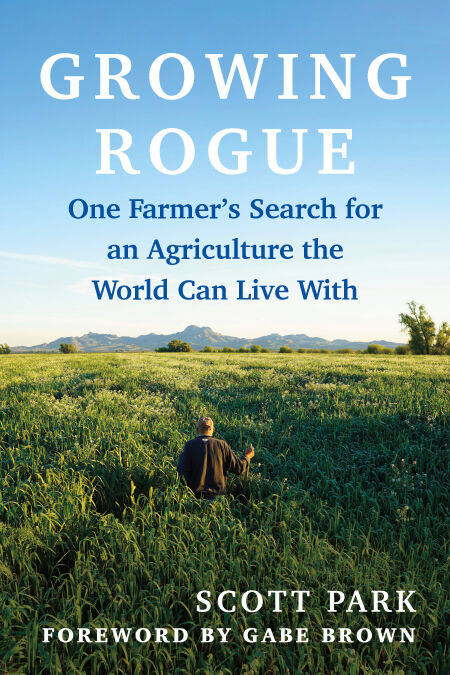
Growing Rogue E-BOOK
One Farmers Search for an Agriculture the World Can Live With
Scott Park
E-book | Engels
€ 22,19
+ 22 punten
Uitvoering
Omschrijving
The inspiring story of one trailblazing California farmer that has proven—with over fifty years of hard-won experience—that large-scale farming of high-value crops can be done in a way that’s positive for the planet and the community—while still making a profit.
Growing Rogue tells the story of Scott Park’s journey from first-generation farmer, starting in 1974 with no ag background (or money, equipment, or connections), to a Regenerative Organic Certified (ROC) steward of 1,700 acres on twenty-seven fields, growing twenty different crops in the Sacramento Valley of California.
Scott’s life story includes both tragedy and triumph as a farmer who shook off the shackles of chemical use and developed a holistic farm system. Park’s method is an anomaly in that it competes successfully in California’s industrial agriculture environment, growing high-value crops (processing tomatoes, fresh market melons and squash, and many more), all using just four inputs that improve each acre every year: cover crops, compost, microorganisms, and seaweed.
Growing Rogue comprises three sections. In Section 1, “The Clone,” Scott describes his early years as a farmer, when he mimicked his neighbors’ practices because he had no knowledge of how to grow processing tomatoes. “The Quest” covers his break from the pack to enter the world of large-scale organic farming. With no roadmap, he struggled to make a living, but persevered in his conviction that conventional farming offered a bleak future for the world. “The Solution” reviews what Scott learned during fifty years of farming, explains PFO’s holistic system, discusses the wide-ranging responsibilities of a farmer (ethical, ecological, economical, and more “icals”), suggests marketing solutions, and explains the current farming crisis.
Growing Rogue tells the story of Scott Park’s journey from first-generation farmer, starting in 1974 with no ag background (or money, equipment, or connections), to a Regenerative Organic Certified (ROC) steward of 1,700 acres on twenty-seven fields, growing twenty different crops in the Sacramento Valley of California.
Scott’s life story includes both tragedy and triumph as a farmer who shook off the shackles of chemical use and developed a holistic farm system. Park’s method is an anomaly in that it competes successfully in California’s industrial agriculture environment, growing high-value crops (processing tomatoes, fresh market melons and squash, and many more), all using just four inputs that improve each acre every year: cover crops, compost, microorganisms, and seaweed.
Growing Rogue comprises three sections. In Section 1, “The Clone,” Scott describes his early years as a farmer, when he mimicked his neighbors’ practices because he had no knowledge of how to grow processing tomatoes. “The Quest” covers his break from the pack to enter the world of large-scale organic farming. With no roadmap, he struggled to make a living, but persevered in his conviction that conventional farming offered a bleak future for the world. “The Solution” reviews what Scott learned during fifty years of farming, explains PFO’s holistic system, discusses the wide-ranging responsibilities of a farmer (ethical, ecological, economical, and more “icals”), suggests marketing solutions, and explains the current farming crisis.
Specificaties
Betrokkenen
- Auteur(s):
- Uitgeverij:
Inhoud
- Aantal bladzijden:
- 256
- Taal:
- Engels
Eigenschappen
- Productcode (EAN):
- 9781645024132
- Verschijningsdatum:
- 28/09/2026
- Uitvoering:
- E-book
- Beveiligd met:
- Adobe DRM
- Formaat:
- ePub


Alleen bij Standaard Boekhandel
+ 22 punten op je klantenkaart van Standaard Boekhandel
Cadeau

AANGERADEN


Beoordelingen
We publiceren alleen reviews die voldoen aan de voorwaarden voor reviews. Bekijk onze voorwaarden voor reviews.