


- Afhalen na 1 uur in een winkel met voorraad
- Gratis thuislevering in België vanaf € 30
- Ruim aanbod met 7 miljoen producten
- Afhalen na 1 uur in een winkel met voorraad
- Gratis thuislevering in België vanaf € 30
- Ruim aanbod met 7 miljoen producten





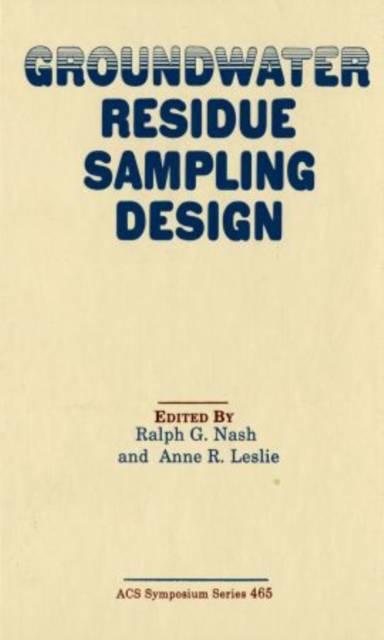
Groundwater Residue Sampling Design
€ 64,45
+ 128 punten
Omschrijving
As the concerns over agrochemical entry into groundwater increases, so does the need for monitoring programs to determine the extent of contamination. This new volume presents information required to design a groundwater sampling program based on geostatistics and state-of-the-art sampling techniques. It examines selection of appropriate design and suitable techniques to obtain accurate data on the presence of agrochemical residues in various environmental compartments. It also provides a basis for comparing programs and data in different geographic areas with varying types of soils and aquifers. Specialized field equipment developed for the study of groundwater contamination is also discussed. Of special interest are chapters on EPA's approach to groundwater-quality monitoring and basin-scale and field-scale designs for various zones, including saturated and unsaturated zones, root zones, and vadose zones.
Specificaties
Betrokkenen
- Uitgeverij:
Inhoud
- Aantal bladzijden:
- 395
- Taal:
- Engels
- Reeks:
- Reeksnummer:
- nr. 465
Eigenschappen
- Productcode (EAN):
- 9780841220911
- Verschijningsdatum:
- 5/05/1991
- Uitvoering:
- Hardcover
- Formaat:
- Genaaid
- Afmetingen:
- 150 mm x 224 mm
- Gewicht:
- 657 g

Alleen bij Standaard Boekhandel
+ 128 punten op je klantenkaart van Standaard Boekhandel
AANGERADEN


Beoordelingen
We publiceren alleen reviews die voldoen aan de voorwaarden voor reviews. Bekijk onze voorwaarden voor reviews.