


- Afhalen na 1 uur in een winkel met voorraad
- Gratis thuislevering in België vanaf € 30
- Ruim aanbod met 7 miljoen producten
- Afhalen na 1 uur in een winkel met voorraad
- Gratis thuislevering in België vanaf € 30
- Ruim aanbod met 7 miljoen producten





Omschrijving
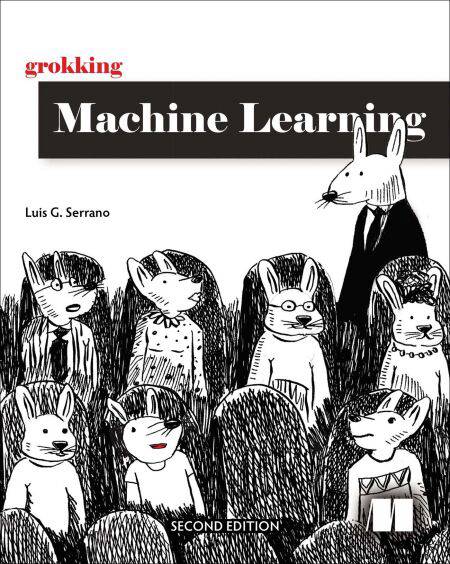
Machine Learning (ML) is a broad term for software that can spot patterns in data and make decisions without being explicitly programmed for each task. ML algorithms power the search and recommendation systems, business workflows, and software security systems you use every day—including AI tools like ChatGPT. This unique book brings the core ideas of ML to life with vivid examples, engaging exercises, and crisp illustrations. There’s no jargon or complex academic theory. All you need is basic programming knowledge, high school mathematics, and curiosity!
This book helps you build an intuitive understanding of machine learning from the ground up. Each chapter introduces a core ML concept, such as regression and tree-based methods, data preprocessing, feature engineering, neural networks, and more. This totally-revised second edition also illuminates modern AI, including transformers, LLMs, and image generation models. You’ll especially appreciate the easy-to-follow Python-based exercises and hands-on mini-projects that encourage you to practice as you learn.
What's inside
• Clear code examples and fun illustrations
• How ML and AI modes are built, trained, and evaluated
• Neural networks, regression, and probabilistic models
• Data preprocessing and feature engineering
• Generative AI basics clearly explained
About the reader
For readers who know basic Python. No machine learning knowledge is necessary.
About the author
Luis G. Serrano is an artificial intelligence scientist, educator, and popularizer. Previously, he was a Machine Learning Engineer at Google and Lead Artificial Intelligence Educator at Apple.
This book helps you build an intuitive understanding of machine learning from the ground up. Each chapter introduces a core ML concept, such as regression and tree-based methods, data preprocessing, feature engineering, neural networks, and more. This totally-revised second edition also illuminates modern AI, including transformers, LLMs, and image generation models. You’ll especially appreciate the easy-to-follow Python-based exercises and hands-on mini-projects that encourage you to practice as you learn.
What's inside
• Clear code examples and fun illustrations
• How ML and AI modes are built, trained, and evaluated
• Neural networks, regression, and probabilistic models
• Data preprocessing and feature engineering
• Generative AI basics clearly explained
About the reader
For readers who know basic Python. No machine learning knowledge is necessary.
About the author
Luis G. Serrano is an artificial intelligence scientist, educator, and popularizer. Previously, he was a Machine Learning Engineer at Google and Lead Artificial Intelligence Educator at Apple.
Specificaties
Betrokkenen
- Auteur(s):
- Uitgeverij:
Inhoud
- Aantal bladzijden:
- 525
- Taal:
- Engels
Eigenschappen
- Productcode (EAN):
- 9781638358169
- Verschijningsdatum:
- 24/08/2026
- Uitvoering:
- E-book
- Beveiligd met:
- Adobe DRM
- Formaat:
- ePub


Alleen bij Standaard Boekhandel
+ 49 punten op je klantenkaart van Standaard Boekhandel

Beoordelingen
We publiceren alleen reviews die voldoen aan de voorwaarden voor reviews. Bekijk onze voorwaarden voor reviews.