



Je cadeautjes zeker op tijd in huis hebben voor de feestdagen? Kom langs in onze winkels en vind het perfecte geschenk!
- Afhalen na 1 uur in een winkel met voorraad
- Gratis thuislevering in België vanaf € 30
- Ruim aanbod met 7 miljoen producten
Je cadeautjes zeker op tijd in huis hebben voor de feestdagen? Kom langs in onze winkels en vind het perfecte geschenk!
- Afhalen na 1 uur in een winkel met voorraad
- Gratis thuislevering in België vanaf € 30
- Ruim aanbod met 7 miljoen producten





Omschrijving
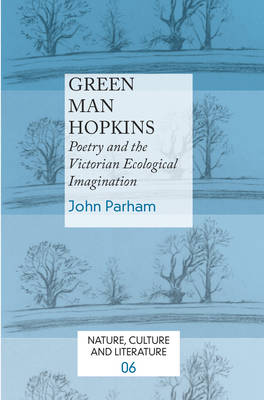
This book, the first to consider Gerard Manley Hopkins as an ecological writer, explores the dimension that social ecology offers to an ecocriticism hitherto dominated by romantic nature writing.
The case for a 'green Hopkins' is made through a paradigm of 'Victorian Ecology' that expands the scope of existing studies in Victorian literature and science. Parham argues that Hopkins developed a two-fold understanding of ecology - as a scientific philosophy constructed around ecosystems theory; and as a corresponding theory of society organised around the sustainable use of energy - as well as a corresponding poetic practice. In a radical new reading of the poems, he suggests that Hopkins translated an innovative nature poetry, in which rhythm conveyed a nature characterised by dialectical energy exchange, into a social 'ecopoetry' that embodied the environmental impact of Victorian 'risk' society on its human population.
Located within a 'Victorian ecological imagination' that fused romanticism and pragmatism, the book views Hopkins' work as indicating the value of reconciling a deep ecological assertion of the intrinsic value of (nonhuman) nature with social ecology's more pragmatic attempts to critique and re-conceptualise human life.
The case for a 'green Hopkins' is made through a paradigm of 'Victorian Ecology' that expands the scope of existing studies in Victorian literature and science. Parham argues that Hopkins developed a two-fold understanding of ecology - as a scientific philosophy constructed around ecosystems theory; and as a corresponding theory of society organised around the sustainable use of energy - as well as a corresponding poetic practice. In a radical new reading of the poems, he suggests that Hopkins translated an innovative nature poetry, in which rhythm conveyed a nature characterised by dialectical energy exchange, into a social 'ecopoetry' that embodied the environmental impact of Victorian 'risk' society on its human population.
Located within a 'Victorian ecological imagination' that fused romanticism and pragmatism, the book views Hopkins' work as indicating the value of reconciling a deep ecological assertion of the intrinsic value of (nonhuman) nature with social ecology's more pragmatic attempts to critique and re-conceptualise human life.
Specificaties
Betrokkenen
- Auteur(s):
- Uitgeverij:
Inhoud
- Aantal bladzijden:
- 308
- Taal:
- Engels
- Reeks:
- Reeksnummer:
- nr. 6
Eigenschappen
- Productcode (EAN):
- 9789042031067
- Verschijningsdatum:
- 1/01/2010
- Uitvoering:
- Paperback
- Formaat:
- Trade paperback (VS)
- Afmetingen:
- 155 mm x 234 mm
- Gewicht:
- 430 g


Alleen bij Standaard Boekhandel
+ 154 punten op je klantenkaart van Standaard Boekhandel
CADEAU


Beoordelingen
We publiceren alleen reviews die voldoen aan de voorwaarden voor reviews. Bekijk onze voorwaarden voor reviews.