


- Afhalen na 1 uur in een winkel met voorraad
- Gratis thuislevering in België vanaf € 30
- Ruim aanbod met 7 miljoen producten
- Afhalen na 1 uur in een winkel met voorraad
- Gratis thuislevering in België vanaf € 30
- Ruim aanbod met 7 miljoen producten





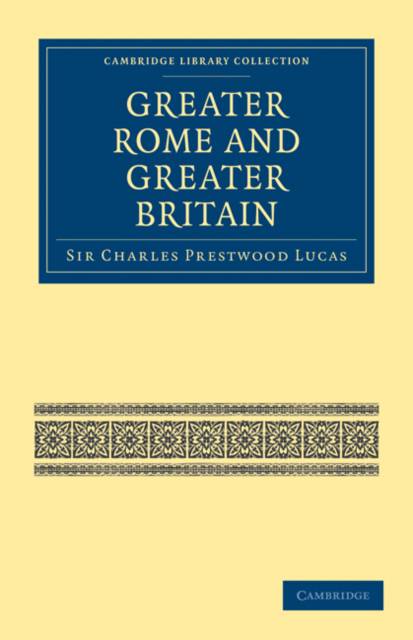
Greater Rome and Greater Britain
Sir Charles Prestwood Lucas
€ 59,95
+ 119 punten
Omschrijving
In later Victorian England, although classical literature had long dominated education, Roman history and politics became popular areas of study, particularly after Queen Victoria became Empress of India in 1877. Many writers on colonialism drew parallels between the Roman and British Empires, but Sir Charles Lucas' book, first published in 1912, went further in its analysis. He stresses that the causes of an empire's growth and strength are numerous, and that geography and technological development are particularly important. Like writers such as Froude, he attempts to forecast the future development of the British Empire. He also points out differences between the two empires. Roman expansion was not accompanied by widespread emigration, in the way that British colonists settled North America and Australasia, for example. British India, manifesting the military and economic domination of a much larger subject people by a tiny administrative class, bore more resemblance to Roman imperialism.
Specificaties
Betrokkenen
- Auteur(s):
- Uitgeverij:
Inhoud
- Aantal bladzijden:
- 198
- Taal:
- Engels
- Reeks:
Eigenschappen
- Productcode (EAN):
- 9781108024013
- Verschijningsdatum:
- 9/12/2010
- Uitvoering:
- Paperback
- Formaat:
- Trade paperback (VS)
- Afmetingen:
- 140 mm x 216 mm
- Gewicht:
- 272 g


Alleen bij Standaard Boekhandel
+ 119 punten op je klantenkaart van Standaard Boekhandel
Cadeau

AANGERADEN


Beoordelingen
We publiceren alleen reviews die voldoen aan de voorwaarden voor reviews. Bekijk onze voorwaarden voor reviews.