


- Afhalen na 1 uur in een winkel met voorraad
- Gratis thuislevering in België vanaf € 30
- Ruim aanbod met 7 miljoen producten
- Afhalen na 1 uur in een winkel met voorraad
- Gratis thuislevering in België vanaf € 30
- Ruim aanbod met 7 miljoen producten





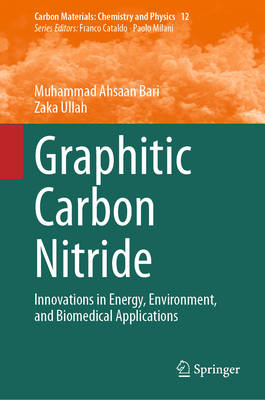
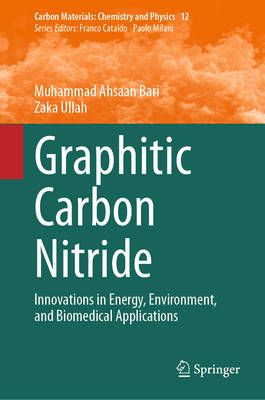
Graphitic Carbon Nitride
Innovations in Energy, Environment, and Biomedical Applications
Muhammad Ahsaan Bari, Zaka Ullah
€ 171,45
+ 342 punten
Omschrijving
This book provides a comprehensive overview of the synthesis, properties, and multifunctional applications of g-C₃N₄, with a strong emphasis on its role in solving critical global challenges. As the world faces escalating challenges related to energy scarcity and environmental pollution, the demand for sustainable solutions has never been greater. Over the past four decades, global energy consumption has risen by an average of 2.2% per year, and by 2050, it is projected to increase by an additional 30%. Currently, fossil fuels such as coal, crude oil, and natural gas account for nearly 90% of the world's energy supply, underscoring the urgent need for renewable and eco-friendly alternatives. Among the most promising solutions is solar energy, an abundant, renewable, and sustainable resource. Photocatalysis, which harnesses solar energy for chemical transformations, has emerged as a key technology for addressing environmental and energy-related challenges. Central to this process are photocatalysts, materials that drive essential reactions such as water splitting, pollutant degradation, and CO₂ reduction. In recent years, graphitic carbon nitride (g-C₃N₄) has garnered significant attention as a metal-free semiconductor with remarkable photocatalytic properties. Its ease of synthesis, chemical stability, and tunable electronic structure make it highly effective in a wide range of applications, including energy conversion, environmental remediation, and biomedical technologies. Beyond photocatalysis, g-C₃N₄ has shown promise in supercapacitors, batteries, electrocatalysis, and emerging biomedical applications such as biosensors, bioimaging, drug delivery, and antimicrobial treatments. Covering photocatalysis, electrochemical energy storage, solar cells, and biomedical advancements, this book offers researchers, engineers, and industry professionals an in-depth understanding of the latest developments and future directions in this rapidly evolving field. With its interdisciplinary approach and practical focus, this book serves as a valuable resource for scientists working on materials science, nanotechnology, renewable energy, and environmental sustainability. By exploring both fundamental principles and cutting-edge applications, it aims to inspire new research pathways and innovative solutions for a cleaner and more sustainable future.
Specificaties
Betrokkenen
- Auteur(s):
- Uitgeverij:
Inhoud
- Aantal bladzijden:
- 165
- Taal:
- Engels
- Reeks:
- Reeksnummer:
- nr. 12
Eigenschappen
- Productcode (EAN):
- 9783032184306
- Verschijningsdatum:
- 13/05/2026
- Uitvoering:
- Hardcover
- Formaat:
- Genaaid
- Afmetingen:
- 155 mm x 235 mm


Alleen bij Standaard Boekhandel
+ 342 punten op je klantenkaart van Standaard Boekhandel
Cadeau

AANGERADEN


Beoordelingen
We publiceren alleen reviews die voldoen aan de voorwaarden voor reviews. Bekijk onze voorwaarden voor reviews.