


- Afhalen na 1 uur in een winkel met voorraad
- Gratis thuislevering in België vanaf € 30
- Ruim aanbod met 7 miljoen producten
- Afhalen na 1 uur in een winkel met voorraad
- Gratis thuislevering in België vanaf € 30
- Ruim aanbod met 7 miljoen producten




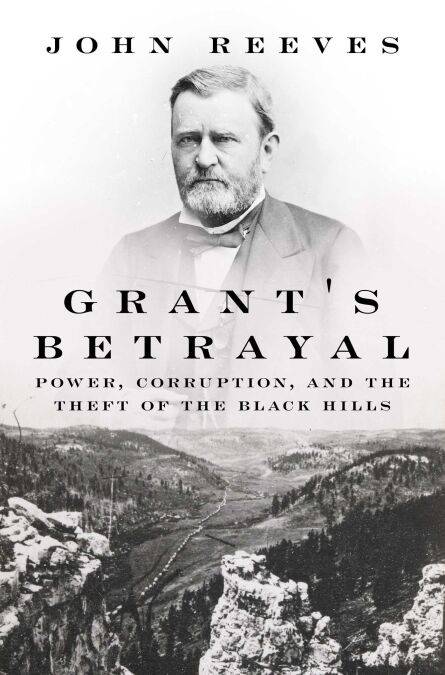
Grant's Betrayal E-BOOK
Power, Corruption, and the Theft of the Black Hills
John Reeves
E-book | Engels
€ 22,36
+ 22 punten
Omschrijving
The controversial story of Ulysses S. Grant’s role in the 1877 seizure of the Black Hills—which the Lakota viewed as sacred land—in response to the humiliating defeat of the U.S. Army at the Battle of Little Bighorn.
A riveting account of the secret, rapacious conspiracy that led to the theft of the sacred Black Hills, Grant’s Betrayal is set against a backdrop of brazen corruption, Lakota resistance, and Gilded Age greed. This unfamiliar story is about capitalism and fraud at the time of America’s first centennial. It’s also about loss. Over a period of several decades, the Lakota people lost most of their land, their bison herds, and their liberty to roam over their once-expansive territory.
After initially pursuing a “Peace Policy,” the Grant administration dramatically reversed course, choosing to pressure the Lakota people into relinquishing the Black Hills after the discovery of gold there in 1874. Referring to the unjust land grab by the Grant administration, a U.S. Court of Claims declared, a century later in 1975: “The duplicity of President Grant’s course and the duress practiced on the starving Sioux, speak for themselves. A more ripe and rank case of dishonorable dealings will never, in all probability, be found in our history.”
Grant’s Betrayal sheds new light on the shocking dispossession of Indigenous lands by corrupt politicians, aggressive military commanders, and Gilded Age capitalists hungry for gold. The heroic resistance offered by Sitting Bull, Crazy Horse, and other Native American luminaries is central to the story as well. This poignant narrative helps us better understand what it means to be an American by reconsidering an unjust and regrettable chapter of our history.
A riveting account of the secret, rapacious conspiracy that led to the theft of the sacred Black Hills, Grant’s Betrayal is set against a backdrop of brazen corruption, Lakota resistance, and Gilded Age greed. This unfamiliar story is about capitalism and fraud at the time of America’s first centennial. It’s also about loss. Over a period of several decades, the Lakota people lost most of their land, their bison herds, and their liberty to roam over their once-expansive territory.
After initially pursuing a “Peace Policy,” the Grant administration dramatically reversed course, choosing to pressure the Lakota people into relinquishing the Black Hills after the discovery of gold there in 1874. Referring to the unjust land grab by the Grant administration, a U.S. Court of Claims declared, a century later in 1975: “The duplicity of President Grant’s course and the duress practiced on the starving Sioux, speak for themselves. A more ripe and rank case of dishonorable dealings will never, in all probability, be found in our history.”
Grant’s Betrayal sheds new light on the shocking dispossession of Indigenous lands by corrupt politicians, aggressive military commanders, and Gilded Age capitalists hungry for gold. The heroic resistance offered by Sitting Bull, Crazy Horse, and other Native American luminaries is central to the story as well. This poignant narrative helps us better understand what it means to be an American by reconsidering an unjust and regrettable chapter of our history.
Specificaties
Betrokkenen
- Auteur(s):
- Uitgeverij:
Inhoud
- Aantal bladzijden:
- 352
- Taal:
- Engels
Eigenschappen
- Productcode (EAN):
- 9798897102174
- Verschijningsdatum:
- 2/11/2026
- Uitvoering:
- E-book
- Beveiligd met:
- Adobe DRM
- Formaat:
- ePub



Alleen bij Standaard Boekhandel
+ 22 punten op je klantenkaart van Standaard Boekhandel
AANGERADEN


Beoordelingen
We publiceren alleen reviews die voldoen aan de voorwaarden voor reviews. Bekijk onze voorwaarden voor reviews.