


- Afhalen na 1 uur in een winkel met voorraad
- Gratis thuislevering in België vanaf € 30
- Ruim aanbod met 7 miljoen producten
- Afhalen na 1 uur in een winkel met voorraad
- Gratis thuislevering in België vanaf € 30
- Ruim aanbod met 7 miljoen producten





Omschrijving
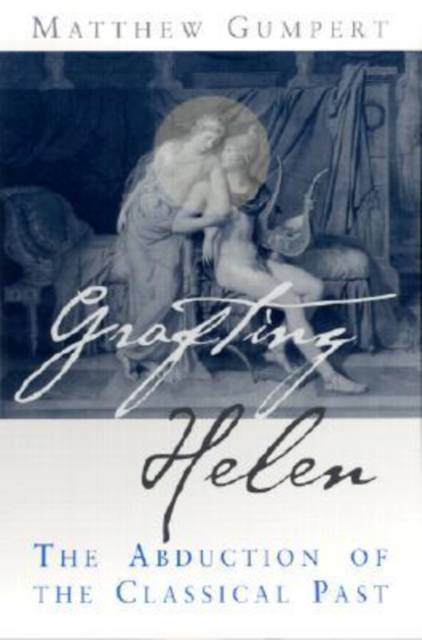
History is a love story: a tale of desire and jealousy, abandonment and fidelity, abduction and theft, rupture and reconciliation. This contention is central to Grafting Helen, Matthew Gumpert's original and dazzling meditation on Helen of Troy as a crucial anchor for much of Western thought and literature.
Grafting Helen looks at "classicism"--the privileged rhetorical language for describing cultural origins in the West--as a protracted form of cultural embezzlement. No coin in the realm has been more valuable, more circulated, more coveted, or more counterfeited than the one that bears the face of Helen of Troy. Gumpert uncovers Helen as the emblem for the past as something to be stolen, appropriated, imitated, extorted, and coveted once again.
Tracing the figure of Helen from its classical origins through the Middle Ages, the French Renaissance, and the modern era, Gumpert suggests that the relation of current Western culture to the past is not like the act of coveting; it is the act of coveting, he argues, for it relies on the same strategies, the same defenses, the same denials, and the same delusions.
Grafting Helen looks at "classicism"--the privileged rhetorical language for describing cultural origins in the West--as a protracted form of cultural embezzlement. No coin in the realm has been more valuable, more circulated, more coveted, or more counterfeited than the one that bears the face of Helen of Troy. Gumpert uncovers Helen as the emblem for the past as something to be stolen, appropriated, imitated, extorted, and coveted once again.
Tracing the figure of Helen from its classical origins through the Middle Ages, the French Renaissance, and the modern era, Gumpert suggests that the relation of current Western culture to the past is not like the act of coveting; it is the act of coveting, he argues, for it relies on the same strategies, the same defenses, the same denials, and the same delusions.
Specificaties
Betrokkenen
- Auteur(s):
- Uitgeverij:
Inhoud
- Aantal bladzijden:
- 352
- Taal:
- Engels
- Reeks:
Eigenschappen
- Productcode (EAN):
- 9780299171247
- Verschijningsdatum:
- 14/11/2001
- Uitvoering:
- Paperback
- Formaat:
- Trade paperback (VS)
- Afmetingen:
- 152 mm x 231 mm
- Gewicht:
- 489 g


Alleen bij Standaard Boekhandel
+ 45 punten op je klantenkaart van Standaard Boekhandel
CADEAU


Beoordelingen
We publiceren alleen reviews die voldoen aan de voorwaarden voor reviews. Bekijk onze voorwaarden voor reviews.