


- Afhalen na 1 uur in een winkel met voorraad
- Gratis thuislevering in België vanaf € 30
- Ruim aanbod met 7 miljoen producten
- Afhalen na 1 uur in een winkel met voorraad
- Gratis thuislevering in België vanaf € 30
- Ruim aanbod met 7 miljoen producten





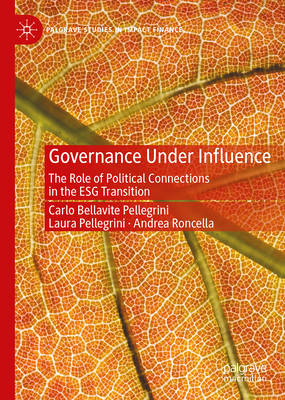
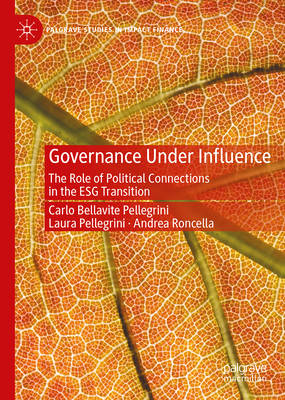
Governance Under Influence
The Role of Political Connections in the Esg Transition
Carlo Bellavite Pellegrini, Laura Pellegrini, Andrea Roncella
€ 162,45
+ 324 punten
Omschrijving
The book focuses on governance issues, through the lens of political connections in corporate Europe. Sustainability in corporate contexts increasingly hinges on the quality of governance--the "G" in ESG--which serves as the backbone for how firms integrate environmental ("E"), social ("S"), and economic sustainability objectives into their strategies and operations. Effective governance frameworks are essential not only for ensuring compliance and accountability, but also for aligning long-term value creation with broader societal and environmental goals. Political connections are a key factor influencing governance structures and decision-making processes, shaping how firms address challenges such as climate risk, social equity, and responsible resource use. These connections can also provide firms with preferential access to credit markets, easing financial constraints that would otherwise hinder investment in sustainable initiatives. Spanning the period from the fall of the Berlin Wall to the European sovereign debt crisis, this first of two volumes offers a systematic and comparative analysis of political connections across four major economies: Italy, France, Germany, and the United Kingdom. Each chapter investigates the evolving nature of political ties, their impact on corporate behavior, and their implications for firm performance and value creation. Combining theoretical discussion with empirical evidence, the book develops a comprehensive framework for understanding how political connections operate as a distinct feature of corporate governance. It offers valuable insights for scholars, policymakers, and practitioners interested in corporate sustainability, political economy, and institutional governance in Europe.
Specificaties
Betrokkenen
- Auteur(s):
- Uitgeverij:
Inhoud
- Aantal bladzijden:
- 210
- Taal:
- Engels
- Reeks:
Eigenschappen
- Productcode (EAN):
- 9783032124494
- Verschijningsdatum:
- 3/01/2026
- Uitvoering:
- Hardcover
- Formaat:
- Genaaid
- Afmetingen:
- 158 mm x 215 mm
- Gewicht:
- 399 g


Alleen bij Standaard Boekhandel
+ 324 punten op je klantenkaart van Standaard Boekhandel
CADEAU

AANGERADEN


Beoordelingen
We publiceren alleen reviews die voldoen aan de voorwaarden voor reviews. Bekijk onze voorwaarden voor reviews.