


- Afhalen na 1 uur in een winkel met voorraad
- Gratis thuislevering in België vanaf € 30
- Ruim aanbod met 7 miljoen producten
- Afhalen na 1 uur in een winkel met voorraad
- Gratis thuislevering in België vanaf € 30
- Ruim aanbod met 7 miljoen producten





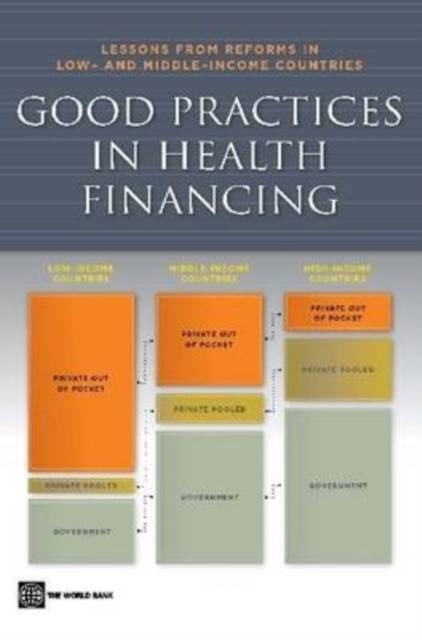
Good Practices in Health Financing
Lessons from Reforms in Low and Middle-Income Countries
Pablo Gottret, George Schieber, Hugh Waters
Paperback | Engels
€ 84,95
+ 169 punten
Omschrijving
For humanitarian reasons and the concern for households' economic and health security, the health sector is at the center of global development policy. Developing countries and the international community are scaling up health systems to meet the Millennium Development Goals (MDGs) and are improving financial protection by securing long-term support for these gains. Yet money alone cannot buy health gains or prevent impoverishment due to catastrophic medical bills; well structured, results-based financing reforms are needed. Unfortunately, global evidence of "successful" health financing policies that can guide the reform effort is very limited and therefore the policy debate is often driven by ideological, one-size-fits-all solutions. 'Good Practices in Health Financing: Lessons from Reforms in Low- and Middle-Income Countries' attempts to begin to fill the void by systematically assessing health financing reforms in nine low- and middle-income countries that have managed to expand their health financing systems to both improve health status and protect against catastrophic medical expenses. The participating countries are: Chile, Colombia, Costa Rica, Estonia, the Kyrgyz Republic, Sri Lanka, Thailand, Tunisia, and Vietnam. The study seeks to identify common enabling factors of their good performance. While the findings for each country are important, collectively they send a clear message to the global community that more attention is needed to define "good practice" and then to evaluate and disseminate the global evidence base.
Specificaties
Betrokkenen
- Auteur(s):
- Uitgeverij:
Inhoud
- Aantal bladzijden:
- 528
- Taal:
- Engels
Eigenschappen
- Productcode (EAN):
- 9780821375112
- Verschijningsdatum:
- 20/06/2008
- Uitvoering:
- Paperback
- Formaat:
- Trade paperback (VS)
- Afmetingen:
- 153 mm x 228 mm
- Gewicht:
- 716 g



Alleen bij Standaard Boekhandel
+ 169 punten op je klantenkaart van Standaard Boekhandel
Cadeau

AANGERADEN


Beoordelingen
We publiceren alleen reviews die voldoen aan de voorwaarden voor reviews. Bekijk onze voorwaarden voor reviews.