


- Afhalen na 1 uur in een winkel met voorraad
- Gratis thuislevering in België vanaf € 30
- Ruim aanbod met 7 miljoen producten
- Afhalen na 1 uur in een winkel met voorraad
- Gratis thuislevering in België vanaf € 30
- Ruim aanbod met 7 miljoen producten





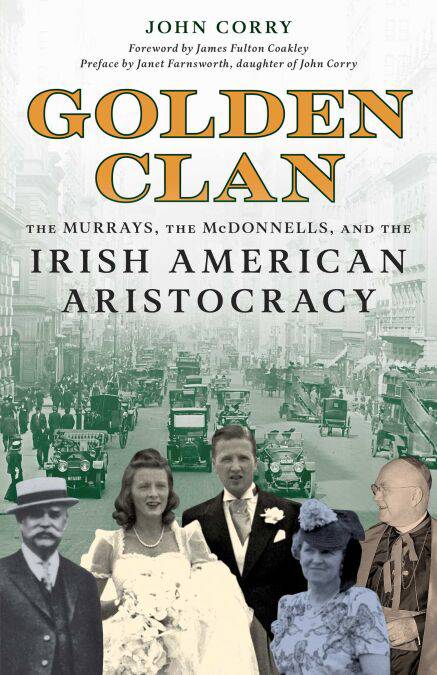
Golden Clan E-BOOK
The Murrays, the McDonnells, and the Irish American Aristocracy
John Corry
E-book | Engels
€ 17,88
+ 17 punten
Uitvoering
Omschrijving
John Corry’s chronicle of the Murrays and the McDonnells is the quintessential story of a successful Irish American clan—perhaps the most successful in sheer numbers and influence. Thomas E. Murray, the patriarch, was born in 1860 in Albany, New York. At his death in 1929, he left $9 million, eight children, forty-eight grandchildren, and a record of industrial accomplishment ranging from 1,110 patented inventions to the consolidation of Con Edison. His faith never left him.
Murray’s children, the “lace curtain” generation, nurtured, increased, and occasionally squandered the new wealth, made feudal marriages with the offspring of other Irish climbers, built great houses on Fifth Avenue and the shore, and a tight, exclusive society upon the twin rocks of Catholicism and respectability.
A third generation was raised in the great houses, convent schools, and the Southampton “compound” (prototype for the parvenu Kennedys’ in Hyannis). Their inevitable entry into secular society found them ill-prepared: marriages with a Ford and Vanderbilt ended in failure. The most recent crop of Murray-McDonnells moves in St. Tropez and St. Mortiz, scenes of the celebrated Charlotte Food–Starvos Niarchos liaison. The author remarks and regrets the loss-through-assimilation of what was distinctively Irish in this and other great families, closing with a memorable firsthand portrait of the indomitable Anna Murray McDonnell.
Corry’s history of the “golden clan” is set against the larger context of the Irish experience in America: tales of Colonial grandees and early nineteenth-century “fashionables”; how the historic emigrations radically changed the nation’s perception of the Irish; how families like the Murrays and the McDonnells came by their values and passed them on; fascinating details of the relationship between the rich Irish and their clergy. Writing with their proper shade of a lilt, John Corry offers a fond and discerning view of a great American Irish family that “arrived”— and never looked back.
Murray’s children, the “lace curtain” generation, nurtured, increased, and occasionally squandered the new wealth, made feudal marriages with the offspring of other Irish climbers, built great houses on Fifth Avenue and the shore, and a tight, exclusive society upon the twin rocks of Catholicism and respectability.
A third generation was raised in the great houses, convent schools, and the Southampton “compound” (prototype for the parvenu Kennedys’ in Hyannis). Their inevitable entry into secular society found them ill-prepared: marriages with a Ford and Vanderbilt ended in failure. The most recent crop of Murray-McDonnells moves in St. Tropez and St. Mortiz, scenes of the celebrated Charlotte Food–Starvos Niarchos liaison. The author remarks and regrets the loss-through-assimilation of what was distinctively Irish in this and other great families, closing with a memorable firsthand portrait of the indomitable Anna Murray McDonnell.
Corry’s history of the “golden clan” is set against the larger context of the Irish experience in America: tales of Colonial grandees and early nineteenth-century “fashionables”; how the historic emigrations radically changed the nation’s perception of the Irish; how families like the Murrays and the McDonnells came by their values and passed them on; fascinating details of the relationship between the rich Irish and their clergy. Writing with their proper shade of a lilt, John Corry offers a fond and discerning view of a great American Irish family that “arrived”— and never looked back.
Specificaties
Betrokkenen
- Auteur(s):
- Uitgeverij:
Inhoud
- Aantal bladzijden:
- 236
- Taal:
- Engels
Eigenschappen
- Productcode (EAN):
- 9781493086924
- Verschijningsdatum:
- 16/09/2024
- Uitvoering:
- E-book
- Beveiligd met:
- Adobe DRM
- Formaat:
- ePub



Alleen bij Standaard Boekhandel
+ 17 punten op je klantenkaart van Standaard Boekhandel
AANGERADEN


Beoordelingen
We publiceren alleen reviews die voldoen aan de voorwaarden voor reviews. Bekijk onze voorwaarden voor reviews.