


- Afhalen na 1 uur in een winkel met voorraad
- Gratis thuislevering in België vanaf € 30
- Ruim aanbod met 7 miljoen producten
- Afhalen na 1 uur in een winkel met voorraad
- Gratis thuislevering in België vanaf € 30
- Ruim aanbod met 7 miljoen producten





€ 38,45
+ 76 punten
Uitvoering
Omschrijving
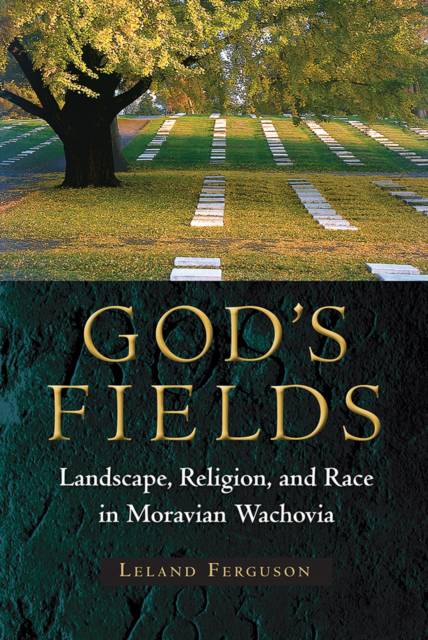
"Provides a fascinating and nuanced study of the transformations in religious and social ideals among Moravians as they worked to implement their aspirations in the harsh realities of a North Carolina landscape shaped by racism. Ferguson reveals the intersecting dynamics of religious aspirations, sectarian prejudices, conflicting designs across cultural landscapes, paradoxical divergences of religious ideals and social realities, and the life stories of African Americans working to navigate such contested terrain."--Christopher C. Fennell, author of Crossroads and Cosmologies "A fascinating examination of the tension of race relations in the antebellum South. God's Fields unfolds like a murder mystery and is hard to put down."--Christopher E. Hendricks, author of The Backcountry Towns of Colonial Virginia The Moravian community of Salem, North Carolina, was founded in 1766, and the town--the hub of nearly 100,000 piedmont acres purchased thirteen years before and named "Wachovia"--quickly became the focal point for the church's colonial presence in the South. While the brethren preached the unity of all humans under God, a careful analysis of the birth and growth of their Salem settlement reveals that the group gradually embraced the institutions of slavery and racial segregation in opposition to their religious beliefs. Although Salem's still-active community includes one of the oldest African American congregations in the nation, the evidence contained in God's Fields reveals that during much of the twentieth century, the church's segregationist past was intentionally concealed. Leland Ferguson's work reconstructing this "secret history" through years of archaeological fieldwork was part of a historical preservation program that helped convince the Moravian Church in North America to formally apologize in 2006 for its participation in slavery and clear a way for racial reconciliation. Leland Ferguson is Distinguished Professor Emeritus of anthropology at the University of South Carolina. He is the author of Uncommon Ground: Archaeology and Colonial African America, 1650-1800, a recipient of the Southern Anthropological Society's James Mooney Award.
Specificaties
Betrokkenen
- Auteur(s):
- Uitgeverij:
Inhoud
- Aantal bladzijden:
- 302
- Taal:
- Engels
- Reeks:
Eigenschappen
- Productcode (EAN):
- 9780813049564
- Verschijningsdatum:
- 17/09/2013
- Uitvoering:
- Paperback
- Formaat:
- Trade paperback (VS)
- Afmetingen:
- 156 mm x 234 mm
- Gewicht:
- 467 g


Alleen bij Standaard Boekhandel
+ 76 punten op je klantenkaart van Standaard Boekhandel

Beoordelingen
We publiceren alleen reviews die voldoen aan de voorwaarden voor reviews. Bekijk onze voorwaarden voor reviews.