


- Afhalen na 1 uur in een winkel met voorraad
- Gratis thuislevering in België vanaf € 30
- Ruim aanbod met 7 miljoen producten
- Afhalen na 1 uur in een winkel met voorraad
- Gratis thuislevering in België vanaf € 30
- Ruim aanbod met 7 miljoen producten





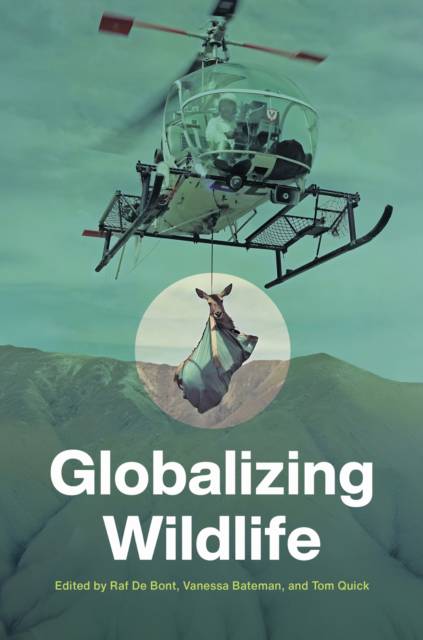
Globalizing Wildlife
€ 49,95
+ 99 punten
Eenvoudig bestellen
Veilig betalen


Gratis thuislevering vanaf € 30 (via bpost)
Gratis levering in je Standaard Boekhandel
Omschrijving
Humans have always incorporated wildlife into processes of work, capture, and exchange. During the nineteenth and twentieth centuries, globalization became the latest in a long line of forces affecting human-animal relations. Grey parrots traveled the world as pets; rats used global shipping infrastructure to spread to far-off islands and became the object of cross-border extermination campaigns; and California sea otters were relocated to accommodate global oil transportation needs. The language of globalization, however, is rarely used to understand the history of these creatures. Globalizing Wildlife shows how wild animals were not simply affected by globalization but shaped its concrete trajectories at local, national, and international scales.
The editors and contributors of this collection bring the more-than-human turn to globalization studies, foregrounding not only how globalization matters for wildlife but also how wildlife matters for and constitutes globalization. The volume presents a range of geographically- and species-diverse case studies spanning from the 1870s to the present day to show that globalizing wildlife is far from a homogenous process. Ultimately, contributors reconceptualize globalization and wildlife in relation to one another and foster new connections between the longstanding study of globalization and the dynamic, rapidly consolidating field of historical animal studies.
Contributors are Vincent Bijman, Christina Dunbar-Hester, Regina Horta Duarte, George Iordachescu, Nancy J. Jacobs, Ajit Menon, Gregg Mitman, Nitin D. Rai, Simone Schleper, Jules Skotnes-Brown, Monica Vasile, and James L. A. Webb Jr.
The editors and contributors of this collection bring the more-than-human turn to globalization studies, foregrounding not only how globalization matters for wildlife but also how wildlife matters for and constitutes globalization. The volume presents a range of geographically- and species-diverse case studies spanning from the 1870s to the present day to show that globalizing wildlife is far from a homogenous process. Ultimately, contributors reconceptualize globalization and wildlife in relation to one another and foster new connections between the longstanding study of globalization and the dynamic, rapidly consolidating field of historical animal studies.
Contributors are Vincent Bijman, Christina Dunbar-Hester, Regina Horta Duarte, George Iordachescu, Nancy J. Jacobs, Ajit Menon, Gregg Mitman, Nitin D. Rai, Simone Schleper, Jules Skotnes-Brown, Monica Vasile, and James L. A. Webb Jr.
Specificaties
Betrokkenen
- Uitgeverij:
Inhoud
- Aantal bladzijden:
- 330
- Taal:
- Engels
- Reeks:
Eigenschappen
- Productcode (EAN):
- 9781469694757
- Verschijningsdatum:
- 26/05/2026
- Uitvoering:
- Paperback
- Formaat:
- Trade paperback (VS)
- Afmetingen:
- 156 mm x 234 mm
- Gewicht:
- 467 g

Alleen bij Standaard Boekhandel
+ 99 punten op je klantenkaart van Standaard Boekhandel
CADEAU

AANGERADEN


Beoordelingen
We publiceren alleen reviews die voldoen aan de voorwaarden voor reviews. Bekijk onze voorwaarden voor reviews.