


- Afhalen na 1 uur in een winkel met voorraad
- Gratis thuislevering in België vanaf € 30
- Ruim aanbod met 7 miljoen producten
- Afhalen na 1 uur in een winkel met voorraad
- Gratis thuislevering in België vanaf € 30
- Ruim aanbod met 7 miljoen producten





€ 198,45
+ 396 punten
Omschrijving
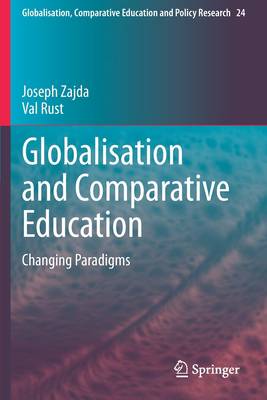
This book focuses on discourses of globalisation in comparative education research and the politics of education reforms. It analyses and evaluates the shifts in methodological approaches to globalisation and education reforms, as reflected in comparative education research and their impact on education policy and pedagogy. The book covers topics such as globalisation and comparative education, globalisation as a multidimensional construct, methods and methodologies in comparative education, the moral face of post-structuralism, and school reforms in the age of globalisation. It offers a critical analysis of education policy reforms.
The book demonstrates a complex nexus between globalisation, ideology and education reforms. On one hand, democratisation and progressive pedagogy is equated with equality, inclusion, equity, tolerance and human rights, while on the other hand, globalisation is perceived - by some critics at least - to be a totalising force that is widening the socio-economic status (SES) gap and cultural and economic capital between the rich and the poor, and bringing power, domination and control by corporate bodies and powerful political, economic and educational organisations. The perception of globalisation as dynamic and multi faceted processes clearly necessitates a multiple perspective approach in the study of comparative education globally. This book contributes in a very scholarly way, to a more holistic understanding of the nexus between globalisation, comparative education research and education reforms.
The book demonstrates a complex nexus between globalisation, ideology and education reforms. On one hand, democratisation and progressive pedagogy is equated with equality, inclusion, equity, tolerance and human rights, while on the other hand, globalisation is perceived - by some critics at least - to be a totalising force that is widening the socio-economic status (SES) gap and cultural and economic capital between the rich and the poor, and bringing power, domination and control by corporate bodies and powerful political, economic and educational organisations. The perception of globalisation as dynamic and multi faceted processes clearly necessitates a multiple perspective approach in the study of comparative education globally. This book contributes in a very scholarly way, to a more holistic understanding of the nexus between globalisation, comparative education research and education reforms.
Specificaties
Betrokkenen
- Auteur(s):
- Uitgeverij:
Inhoud
- Aantal bladzijden:
- 228
- Taal:
- Engels
- Reeks:
- Reeksnummer:
- nr. 24
Eigenschappen
- Productcode (EAN):
- 9789402420562
- Verschijningsdatum:
- 29/03/2022
- Uitvoering:
- Paperback
- Formaat:
- Trade paperback (VS)
- Afmetingen:
- 156 mm x 234 mm
- Gewicht:
- 362 g


Alleen bij Standaard Boekhandel
+ 396 punten op je klantenkaart van Standaard Boekhandel

Beoordelingen
We publiceren alleen reviews die voldoen aan de voorwaarden voor reviews. Bekijk onze voorwaarden voor reviews.