


- Afhalen na 1 uur in een winkel met voorraad
- Gratis thuislevering in België vanaf € 30
- Ruim aanbod met 7 miljoen producten
- Afhalen na 1 uur in een winkel met voorraad
- Gratis thuislevering in België vanaf € 30
- Ruim aanbod met 7 miljoen producten





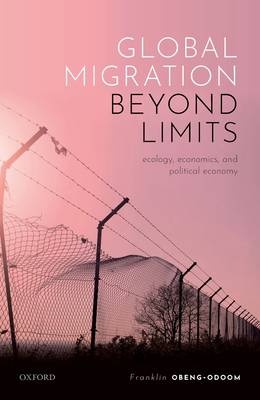
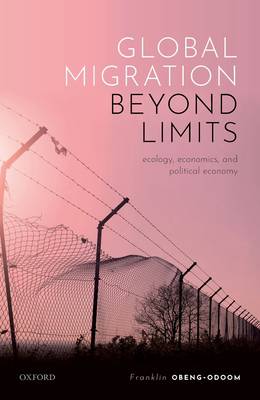
Global Migration Beyond Limits
Ecology, Economics, and Political Economy
Franklin Obeng-Odoom
Hardcover | Engels
€ 161,45
+ 322 punten
Eenvoudig bestellen
Veilig betalen


Gratis thuislevering vanaf € 30 (via bpost)
Gratis levering in je Standaard Boekhandel
Omschrijving
Global Migration beyond Limits takes a critical approach to mainstream economic accounts of migration, environment, and inequality. Drawing on a range of case studies from Africa, the Middle East, Asia, Australia, Europe, and the Americas, Obeng-Odoom argues that much of the crisis of migration can be understood as a reflection of cumulative stratification at different scales in the global system, though the form of migration is conditioned by more than economic forces. Examining the experiences of migrant farmers, street workers, refugees, international students, and many more, this book shows that the so-called migration crisis is an expression of a political-economic system in which socially created value is privately appropriated as rents by a privileged few who use institutions such as land and property rights, race, ethnicity, class, and gender to keep others in their place.
Specificaties
Betrokkenen
- Auteur(s):
- Uitgeverij:
Inhoud
- Aantal bladzijden:
- 322
- Taal:
- Engels
Eigenschappen
- Productcode (EAN):
- 9780198867180
- Verschijningsdatum:
- 9/03/2022
- Uitvoering:
- Hardcover
- Formaat:
- Genaaid
- Afmetingen:
- 165 mm x 239 mm
- Gewicht:
- 662 g


Alleen bij Standaard Boekhandel
+ 322 punten op je klantenkaart van Standaard Boekhandel
CADEAU

AANGERADEN


Beoordelingen
We publiceren alleen reviews die voldoen aan de voorwaarden voor reviews. Bekijk onze voorwaarden voor reviews.