


- Afhalen na 1 uur in een winkel met voorraad
- Gratis thuislevering in België vanaf € 30
- Ruim aanbod met 7 miljoen producten
- Afhalen na 1 uur in een winkel met voorraad
- Gratis thuislevering in België vanaf € 30
- Ruim aanbod met 7 miljoen producten





Omschrijving
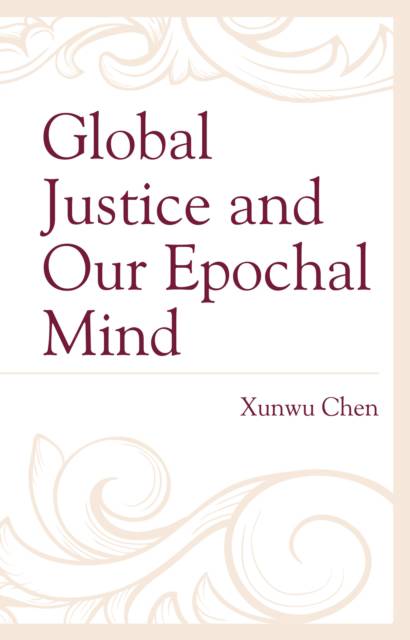
Global Justice and Our Epochal Mind explores the mind of our epoch, defined as the period since the Nuremberg Trial and the establishment of the United Nations in 1945. Xunwu Chen examines four defining ideas of this epoch--global justice, cosmopolitanism, crimes against humanity, and cultural toleration--as well as the structural relationships among these ideas. Chen argues that the mind of our epoch is essentially the mind of humanity. Its world view, horizon, standpoint, norms, standards, and vocabularies are of humanity, by humanity, and for humanity, and all are embodied in human institutions and practices throughout the globe. Meanwhile, our epochal mind has a dialectical relationship with particular cultures bearing normative force. As a metaphysical subjectivity and substance, humanity is the source of all human values in our epoch and defines what can and should be human values and virtues. Humankind, therefore, are a people with socio-political and legal sovereignty, sharing a common fate. This novel study brings a cross-cultural approach and will be of great interest to students and scholars of philosophy, political science, sociology, and the humanities more broadly.
Specificaties
Betrokkenen
- Auteur(s):
- Uitgeverij:
Inhoud
- Aantal bladzijden:
- 280
- Taal:
- Engels
Eigenschappen
- Productcode (EAN):
- 9781498596336
- Verschijningsdatum:
- 23/10/2019
- Uitvoering:
- Hardcover
- Formaat:
- Genaaid
- Afmetingen:
- 152 mm x 229 mm
- Gewicht:
- 580 g


Alleen bij Standaard Boekhandel
Cadeau

AANGERADEN


Beoordelingen
We publiceren alleen reviews die voldoen aan de voorwaarden voor reviews. Bekijk onze voorwaarden voor reviews.