


- Afhalen na 1 uur in een winkel met voorraad
- Gratis thuislevering in België vanaf € 30
- Ruim aanbod met 7 miljoen producten
- Afhalen na 1 uur in een winkel met voorraad
- Gratis thuislevering in België vanaf € 30
- Ruim aanbod met 7 miljoen producten





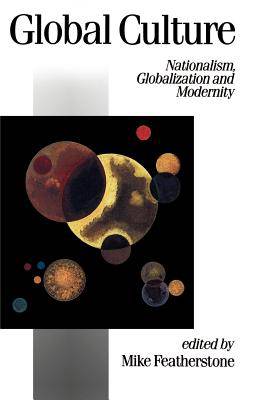
Global Culture
Nationalism, Globalization and Modernity
€ 204,95
+ 409 punten
Eenvoudig bestellen
Veilig betalen


Gratis thuislevering vanaf € 30 (via bpost)
Gratis levering in je Standaard Boekhandel
Omschrijving
More than ever before, people, ideas, commodities, money, and information are moving freely across national frontiers. And as this occurs, it gives rise to several significant questions: Is a unified world culture emerging? If so, how will this affect the autonomy of existing cultures? Will they be supplanted by a unified culture, or can they maintain distinct identities? In this provocative volume, internationally recognized social scientists explore these questions and assess the impact--both positive and negative--of an emerging global culture. Many different explanations are put forth to explain the trends toward global unification, as well as their relation to an economic world system. The contributors also examine the emergence of "third cultures," such as international law, the financial markets, and mass media conglomerates, as elements which transcend national boundaries. And, in addition to analyzing the extent, causation, and consequences of a global culture, the contributors consider its implication for the social sciences. Global Culture will interest all scholars interested in political science, cultural studies, world-systems, development studies, and sociology. "Appadurai′s article ′Disjunction and Difference in the Global Cultural Economy′ does an excellent job of presenting five theoretical dimensions along which culture is transmitted from one society to another. . . . An insightful view into the question of global culture. Contributes to the reader′s further understanding of the situations in which one lives and works. . . . An in-depth study of the materials presented here are certain to facilitate the reader′s comprehension of the massive social, political and economic changes happening around us and to us on a daily basis. . . . Provides valuable information and questions to be considered by any educational person interested in more fully understanding the social movements and social changes prevalent in today′s world." --Journal of Applied Rehabilitation Counseling "This is a rich and stimulating collection of heterogeneous reflections on the theme of ′the global.′ Rich in the variety of themes and perspectives . . . it is a series of windows on the world informed by thematic and theoretical sensibilities rather than a paradigm that unites the contributions. Since there are enough studies of global dynamics which are informed by theoretical paradigms, particularly in international relations and political economy, this collection, which thematizes the perplexities and paradoxes of globalization as a multidimensional process, is a welcome variation." --Development & Change
Specificaties
Betrokkenen
- Uitgeverij:
Inhoud
- Aantal bladzijden:
- 416
- Taal:
- Engels
- Reeks:
- Reeksnummer:
- nr. 2
Eigenschappen
- Productcode (EAN):
- 9780803983229
- Verschijningsdatum:
- 1/08/1990
- Uitvoering:
- Paperback
- Formaat:
- Trade paperback (VS)
- Afmetingen:
- 142 mm x 215 mm
- Gewicht:
- 435 g


Alleen bij Standaard Boekhandel
+ 409 punten op je klantenkaart van Standaard Boekhandel
CADEAU

AANGERADEN


Beoordelingen
We publiceren alleen reviews die voldoen aan de voorwaarden voor reviews. Bekijk onze voorwaarden voor reviews.