


- Afhalen na 1 uur in een winkel met voorraad
- Gratis thuislevering in België vanaf € 30
- Ruim aanbod met 7 miljoen producten
- Afhalen na 1 uur in een winkel met voorraad
- Gratis thuislevering in België vanaf € 30
- Ruim aanbod met 7 miljoen producten





€ 65,95
+ 131 punten
Omschrijving
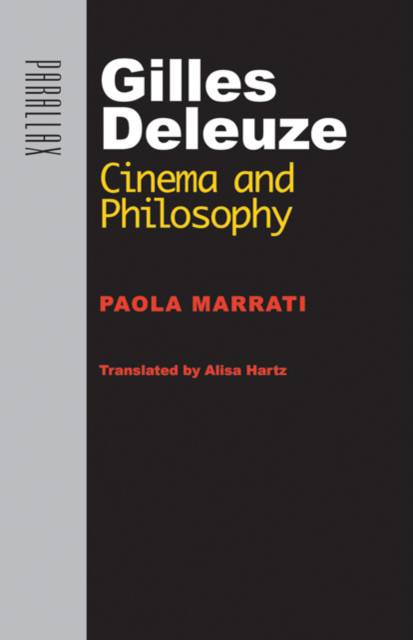
In recent years, the recognition of Gilles Deleuze as one of the major philosophers of the twentieth century has heightened attention to his brilliant and complex writings on film. What is the place of Cinema 1 and Cinema 2 in the corpus of his philosophy? How and why does Deleuze consider cinema as a singular object of philosophical attention, a specific mode of thought? How does his philosophy of film combine and further his approaches to time, movement, and perception, and how does it produce an escape from subjectivity and a plunge into the immanence of images? How does it recode and utilize Henri Bergson's thought and André Bazin's film theory? What does it tell us about perceiving a world in images-indeed about our relation to the world? These are the central questions addressed in Paola Marrati's powerful and clear elucidation of Deleuze's philosophy of film. Humanities, film studies, and social science scholars will find this book a valuable contribution to the philosophical literature on cinema and its pertinence in contemporary life.
Specificaties
Betrokkenen
- Auteur(s):
- Vertaler(s):
- Uitgeverij:
Inhoud
- Aantal bladzijden:
- 160
- Taal:
- Engels
- Reeks:
Eigenschappen
- Productcode (EAN):
- 9781421407913
- Verschijningsdatum:
- 10/08/2012
- Uitvoering:
- Paperback
- Formaat:
- Trade paperback (VS)
- Afmetingen:
- 140 mm x 216 mm
- Gewicht:
- 181 g


Alleen bij Standaard Boekhandel
+ 131 punten op je klantenkaart van Standaard Boekhandel
Cadeau

AANGERADEN


Beoordelingen
We publiceren alleen reviews die voldoen aan de voorwaarden voor reviews. Bekijk onze voorwaarden voor reviews.