

- Afhalen na 1 uur in een winkel met voorraad
- Gratis thuislevering in België vanaf € 30
- Ruim aanbod met 7 miljoen producten
- Afhalen na 1 uur in een winkel met voorraad
- Gratis thuislevering in België vanaf € 30
- Ruim aanbod met 7 miljoen producten





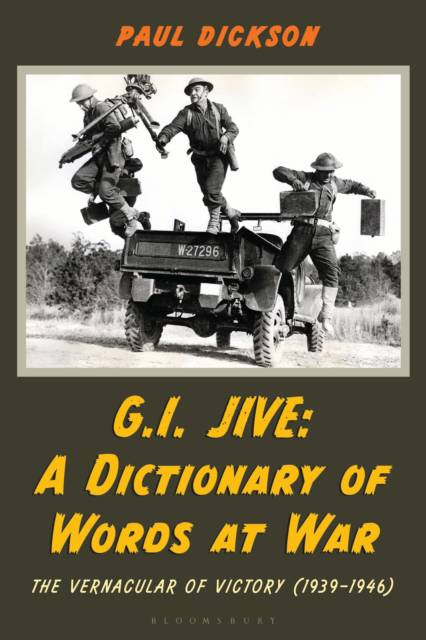
G.I. Jive
A Dictionary of Words at War: The Vernacular of Victory (1939-1946)
Paul Dickson
Hardcover | Engels
€ 96,45
+ 192 punten
Omschrijving
The language of American World War II military service began to evolve with the first draftees of 1940. Their emerging vocabulary was irreverent, creative, and often obscene, influenced by the worlds of music, jazz, swing, jive, and the nation's fascination with occupational slang. The massive Army maneuvers in Tennessee during the spring of 1941 gave rise to a host of profane acronyms, including SNAFU, FUBAR, SOL, and others. A vibrant new American war slang took shape, bolstered by the brash slang already in use by the British Royal Air Force. G.I. Jive: A Dictionary of Words at War: The Vernacular of Victory (1939-1946) explores that language, offering a fresh and multifaceted perspective on the war and the people who fought it. Definitions are richly detailed, incorporating word histories, quotations, and examples of early usage in print. Primary sources include news accounts, memoirs, diaries, letters, oral histories, and various slang and jargon compilations published during the war.
Specificaties
Betrokkenen
- Auteur(s):
- Uitgeverij:
Inhoud
- Aantal bladzijden:
- 448
- Taal:
- Engels
Eigenschappen
- Productcode (EAN):
- 9798765145135
- Verschijningsdatum:
- 8/01/2026
- Uitvoering:
- Hardcover
- Formaat:
- Genaaid
- Afmetingen:
- 160 mm x 232 mm
- Gewicht:
- 771 g


Alleen bij Standaard Boekhandel
+ 192 punten op je klantenkaart van Standaard Boekhandel

Beoordelingen
We publiceren alleen reviews die voldoen aan de voorwaarden voor reviews. Bekijk onze voorwaarden voor reviews.