


- Afhalen na 1 uur in een winkel met voorraad
- Gratis thuislevering in België vanaf € 30
- Ruim aanbod met 7 miljoen producten
- Afhalen na 1 uur in een winkel met voorraad
- Gratis thuislevering in België vanaf € 30
- Ruim aanbod met 7 miljoen producten





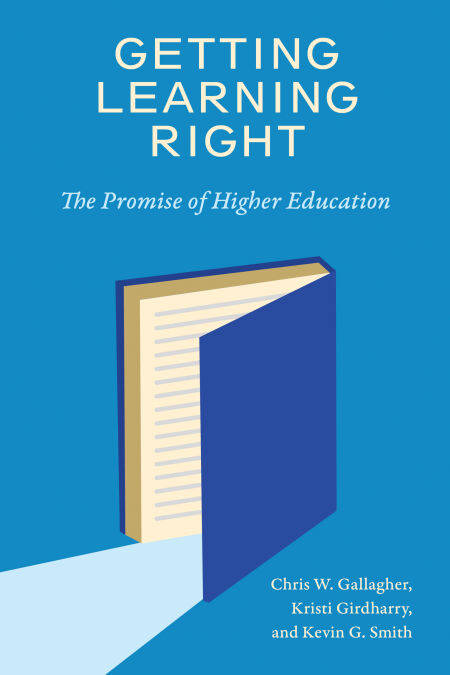
Getting Learning Right E-BOOK
The Promise of Higher Education
Chris W. Gallagher, Kristi Girdharry, Kevin G. Smith
E-book | Engels
€ 39,42
+ 39 punten
Uitvoering
Omschrijving
An action-oriented guide to revitalizing higher education by putting learning at the center of institutional action.
As the challenges to higher education continue to mount, we believe that the surest path forward is a renewed commitment to the primary purpose of colleges and universities: higher learning. In Getting Learning Right, Chris Gallagher, Kristi Girdharry, and Kevin Smith argue that institutions can meet today’s challenges—public skepticism, AI, political pressure—by orienting decision making around a deep understanding of their learners and how learning actually works.
The book examines institutional practices undertaken by colleges and universities that get learning right: listening to students; designing learning-focused environments; employing collaborative and project-based learning; helping students build networks of support and opportunity; offering flexible learning pathways; and codesigning and cocreating with students. Each practice is illustrated through key learning concepts, real institutional examples, and firsthand student accounts, whose reports offer fresh insights into more established concepts such as experiential learning and learning transfer.
Written for practical and effective use, the book includes reflective questions at the end of each chapter that are designed to facilitate conversation and inform learning-grounded design.
As the challenges to higher education continue to mount, we believe that the surest path forward is a renewed commitment to the primary purpose of colleges and universities: higher learning. In Getting Learning Right, Chris Gallagher, Kristi Girdharry, and Kevin Smith argue that institutions can meet today’s challenges—public skepticism, AI, political pressure—by orienting decision making around a deep understanding of their learners and how learning actually works.
The book examines institutional practices undertaken by colleges and universities that get learning right: listening to students; designing learning-focused environments; employing collaborative and project-based learning; helping students build networks of support and opportunity; offering flexible learning pathways; and codesigning and cocreating with students. Each practice is illustrated through key learning concepts, real institutional examples, and firsthand student accounts, whose reports offer fresh insights into more established concepts such as experiential learning and learning transfer.
Written for practical and effective use, the book includes reflective questions at the end of each chapter that are designed to facilitate conversation and inform learning-grounded design.
Specificaties
Betrokkenen
- Auteur(s):
- Uitgeverij:
Inhoud
- Aantal bladzijden:
- 240
- Taal:
- Engels
Eigenschappen
- Productcode (EAN):
- 9780262054225
- Verschijningsdatum:
- 3/08/2026
- Uitvoering:
- E-book
- Beveiligd met:
- Adobe DRM
- Formaat:
- ePub


Alleen bij Standaard Boekhandel
+ 39 punten op je klantenkaart van Standaard Boekhandel
Cadeau

AANGERADEN


Beoordelingen
We publiceren alleen reviews die voldoen aan de voorwaarden voor reviews. Bekijk onze voorwaarden voor reviews.