


- Afhalen na 1 uur in een winkel met voorraad
- Gratis thuislevering in België vanaf € 30
- Ruim aanbod met 7 miljoen producten
- Afhalen na 1 uur in een winkel met voorraad
- Gratis thuislevering in België vanaf € 30
- Ruim aanbod met 7 miljoen producten





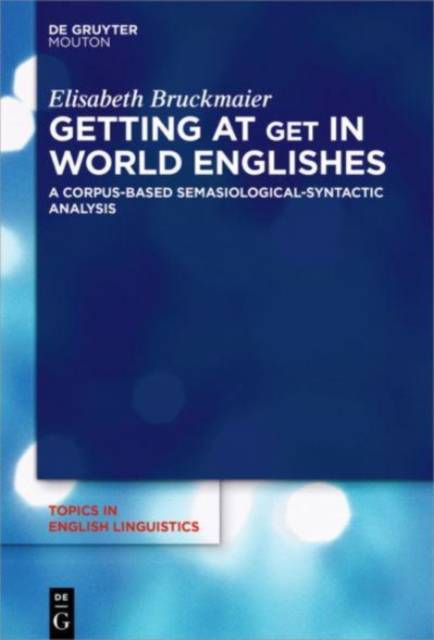
Getting at Get in World Englishes
A Corpus-Based Semasiological-Syntactic Analysis
Elisabeth Bruckmaier
€ 155,95
+ 311 punten
Omschrijving
Despite its exceptional frequency and versatility, GET has never been a focus of research in its entire variability, which goes from lexical to grammatical uses, nor in large amounts of data from different varieties of English. The present corpus-based study deals with over 11,600 tokens of GET in written and spoken language from three varieties of English and thus provides new insights for variationist linguistics. Firstly, it offers a comprehensive semasiological-syntactic analysis of GET, i.e. an analysis of all its meanings and all the constructions into which it enters, suggesting ten categories as being necessary for its complete description. Secondly, it contributes to the understanding of factors that are at work in variation in World Englishes and lead to quantitative differences between regional standard varieties. Thus, the present study demonstrates that the use of GET in the New Englishes analysed is less affected by substrate effects than by the effects of Second Language Acquisition and the varying influence of British and American English norms. Moreover, it can be shown that the New Englishes display more grammatical uses of GET than does British English.
Specificaties
Betrokkenen
- Auteur(s):
- Uitgeverij:
Inhoud
- Aantal bladzijden:
- 344
- Taal:
- Engels
- Reeks:
- Reeksnummer:
- nr. 95
Eigenschappen
- Productcode (EAN):
- 9783110495997
- Verschijningsdatum:
- 20/02/2017
- Uitvoering:
- Hardcover
- Formaat:
- Genaaid
- Afmetingen:
- 160 mm x 234 mm
- Gewicht:
- 635 g


Alleen bij Standaard Boekhandel
+ 311 punten op je klantenkaart van Standaard Boekhandel
Cadeau

AANGERADEN


Beoordelingen
We publiceren alleen reviews die voldoen aan de voorwaarden voor reviews. Bekijk onze voorwaarden voor reviews.