


- Afhalen na 1 uur in een winkel met voorraad
- Gratis thuislevering in België vanaf € 30
- Ruim aanbod met 7 miljoen producten
- Afhalen na 1 uur in een winkel met voorraad
- Gratis thuislevering in België vanaf € 30
- Ruim aanbod met 7 miljoen producten





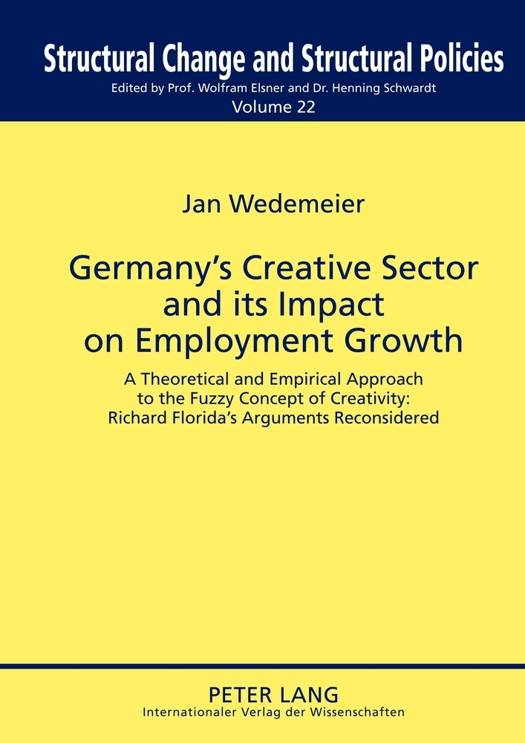
Germany's Creative Sector and Its Impact on Employment Growth
A Theoretical and Empirical Approach to the Fuzzy Concept of Creativity: Richard Florida's Arguments Reconsidered
Jan Wedemeier
€ 61,45
+ 122 punten
Omschrijving
The creative sector is considered to impact on employment and creative sector's employment growth. Using a fixed effects model with time-lags, evidence is found that the creative sector fosters the growth rate of employment in German regions. Large shares of creative professionals lead to an increase in employment, but also reduce the growth rate of the creative sector. However, the growth rates are unequally distributed between the regions. Initially large shares of creative professionals further push the regional concentration of those professions in highly agglomerated regions. Driving forces for the concentration are specific characteristics, i.e. knowledge spillovers and cultural amenities. Moreover, for the evolution of the creative sector current policy strategies for the promotion of creative cities are presented.
Specificaties
Betrokkenen
- Auteur(s):
- Uitgeverij:
Inhoud
- Aantal bladzijden:
- 140
- Taal:
- Engels
- Reeks:
- Reeksnummer:
- nr. 22
Eigenschappen
- Productcode (EAN):
- 9783631635827
- Verschijningsdatum:
- 31/05/2012
- Uitvoering:
- Hardcover
- Formaat:
- Genaaid
- Afmetingen:
- 152 mm x 211 mm
- Gewicht:
- 453 g


Alleen bij Standaard Boekhandel
+ 122 punten op je klantenkaart van Standaard Boekhandel
Cadeau

AANGERADEN


Beoordelingen
We publiceren alleen reviews die voldoen aan de voorwaarden voor reviews. Bekijk onze voorwaarden voor reviews.