


- Afhalen na 1 uur in een winkel met voorraad
- Gratis thuislevering in België vanaf € 30
- Ruim aanbod met 7 miljoen producten
- Afhalen na 1 uur in een winkel met voorraad
- Gratis thuislevering in België vanaf € 30
- Ruim aanbod met 7 miljoen producten





€ 26,95
+ 53 punten
Eenvoudig bestellen
Veilig betalen


Gratis thuislevering vanaf € 30 (via bpost)
Gratis levering in je Standaard Boekhandel
Omschrijving
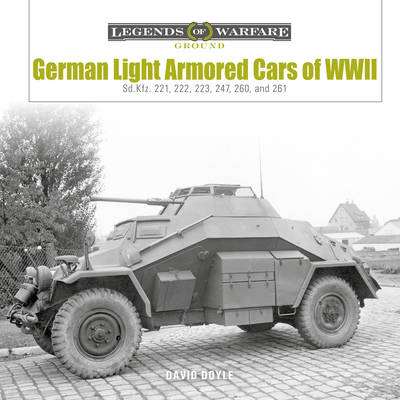
The German military operated a variety of light armored cars during the Second World War. These vehicles were categorized under the umbrella of "Sonderkraftfahrzeug" (abbreviated as Sd.Kfz.), which translates roughly to special-use vehicle.
The first of these purpose-built light armored cars was the Sd.Kfz. 221, which entered series production in 1935. The 221 served as the basis for the more heavily armed Sd.Kfz. 222. The 221 was once again repurposed into a mobile communications platform designated Sd.Kfz. 223. The Sd.Kfz. 260 and 261 were much like the Sd.Kfz. 223 but without armament. An entirely different chassis was implemented for the Sd.Kfz. 247 command vehicle, which was supplied in both six- and four-wheel variants.
This work is inclusive of all the above designations of armored car. It includes more than 150 images with detailed captions. These contents are useful for identifying and differentiating German light armored cars and provide a clear technical description of both interior and exterior details.
The first of these purpose-built light armored cars was the Sd.Kfz. 221, which entered series production in 1935. The 221 served as the basis for the more heavily armed Sd.Kfz. 222. The 221 was once again repurposed into a mobile communications platform designated Sd.Kfz. 223. The Sd.Kfz. 260 and 261 were much like the Sd.Kfz. 223 but without armament. An entirely different chassis was implemented for the Sd.Kfz. 247 command vehicle, which was supplied in both six- and four-wheel variants.
This work is inclusive of all the above designations of armored car. It includes more than 150 images with detailed captions. These contents are useful for identifying and differentiating German light armored cars and provide a clear technical description of both interior and exterior details.
Specificaties
Betrokkenen
- Auteur(s):
- Uitgeverij:
Inhoud
- Aantal bladzijden:
- 112
- Taal:
- Engels
- Reeks:
- Reeksnummer:
- nr. 41
Eigenschappen
- Productcode (EAN):
- 9780764371585
- Verschijningsdatum:
- 28/07/2026
- Uitvoering:
- Hardcover
- Formaat:
- Genaaid
- Afmetingen:
- 229 mm x 229 mm
- Gewicht:
- 45 g


Alleen bij Standaard Boekhandel
+ 53 punten op je klantenkaart van Standaard Boekhandel
CADEAU

AANGERADEN


Beoordelingen
We publiceren alleen reviews die voldoen aan de voorwaarden voor reviews. Bekijk onze voorwaarden voor reviews.