


- Afhalen na 1 uur in een winkel met voorraad
- Gratis thuislevering in België vanaf € 30
- Ruim aanbod met 7 miljoen producten
- Afhalen na 1 uur in een winkel met voorraad
- Gratis thuislevering in België vanaf € 30
- Ruim aanbod met 7 miljoen producten





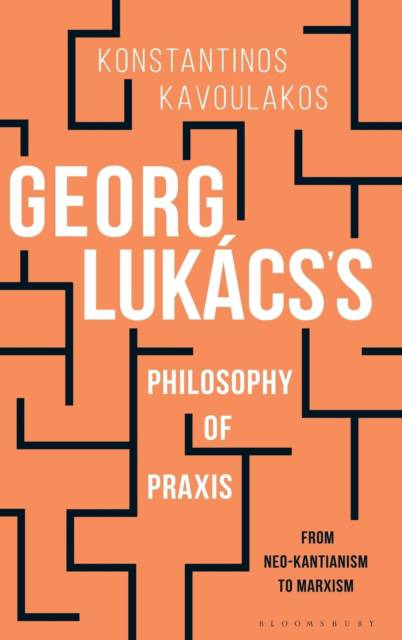
Georg Lukács's Philosophy of PRAXIS
From Neo-Kantianism to Marxism
Konstantinos Kavoulakos
Hardcover | Engels
€ 296,95
+ 593 punten
Uitvoering
Omschrijving
Georg Lukács' early Marxist philosophy of the 1920s laid the foundations of Critical Theory. However the evaluation of Lukács' philosophical contribution has been largely determined by one-sided readings of eminent theorists like Adorno, Habermas, Honneth or even Lukács himself. This book offers a new reconstruction of Lukács' early Marxist work, capable of restoring its dialectical complexity by highlighting its roots in his neo-Kantian, 'pre-Marxist' period.
In his pre-Marxist work Lukács sought to articulate a critique of formalism from the standpoint of a dubious mystical ethics of revolutionary praxis. Consequently, Lukács discovered a more coherent and realistic answer to his philosophical dilemmas in Marxism. At the same time, he retained his neo-Kantian reservations about idealist dialectics. In his reading of historical materialism he combined non-idealist, non-systematic historical dialectics with an emphasis on conscious, collective, transformative praxis. Reformulated in this way Lukács' classical argument plays a central role within a radical Critical Theory.Specificaties
Betrokkenen
- Auteur(s):
- Uitgeverij:
Inhoud
- Aantal bladzijden:
- 264
- Taal:
- Engels
Eigenschappen
- Productcode (EAN):
- 9781474267410
- Verschijningsdatum:
- 20/09/2018
- Uitvoering:
- Hardcover
- Formaat:
- Genaaid
- Afmetingen:
- 152 mm x 236 mm
- Gewicht:
- 517 g


Alleen bij Standaard Boekhandel
+ 593 punten op je klantenkaart van Standaard Boekhandel
Cadeau

AANGERADEN


Beoordelingen
We publiceren alleen reviews die voldoen aan de voorwaarden voor reviews. Bekijk onze voorwaarden voor reviews.