Standaard Boekhandel gebruikt cookies en gelijkaardige technologieën om de website goed te laten werken en je een betere surfervaring te bezorgen.
Hieronder kan je kiezen welke cookies je wilt inschakelen:
Technische en functionele cookies
Deze cookies zijn essentieel om de website goed te laten functioneren, en laten je toe om bijvoorbeeld in te loggen. Je kan deze cookies niet uitschakelen.
Analytische cookies
Deze cookies verzamelen anonieme informatie over het gebruik van onze website. Op die manier kunnen we de website beter afstemmen op de behoeften van de gebruikers.
Marketingcookies
Deze cookies delen je gedrag op onze website met externe partijen, zodat je op externe platformen relevantere advertenties van Standaard Boekhandel te zien krijgt.
Bedankt voor het vertrouwen het afgelopen jaar! Om jou te bedanken bieden we GRATIS verzending (in België) aan op alles gedurende de hele maand januari.
Afhalen na 1 uur in een winkel met voorraad
In januari gratis thuislevering in België
Ruim aanbod met 7 miljoen producten
Bedankt voor het vertrouwen het afgelopen jaar! Om jou te bedanken bieden we GRATIS verzending (in België) aan op alles gedurende de hele maand januari.
Je kan maximaal 250 producten tegelijk aan je winkelmandje toevoegen. Verwijdere enkele producten uit je winkelmandje, of splits je bestelling op in meerdere bestellingen.
In januari gratis thuislevering in België (via bpost)
Gratis levering in je Standaard Boekhandel
Omschrijving
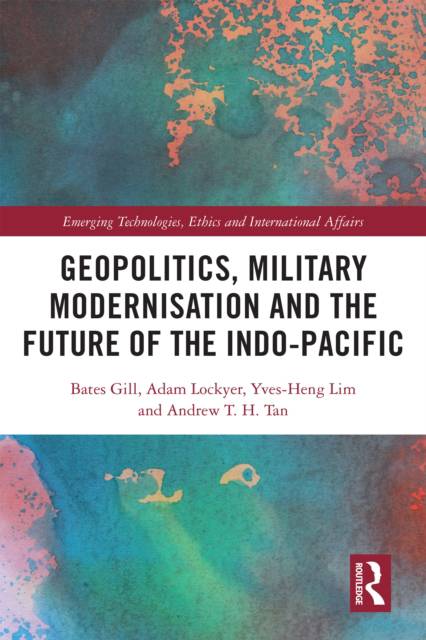
This book examines to what extent geopolitics explains the current wave of force modernisation in the Indo-Pacific region. Examining the leading Indo-Pacific nations in terms of defence spending: the United States, China, India, Japan, South Korea, Australia, Taiwan, Singapore, Pakistan, Indonesia and Thailand, geopolitical principles are used to create hypotheses that can be tested against the military modernisation programmes of the major actors in the Indo-Pacific region. The book represents a bridge between reference works and the literature on international politics in the Indo-Pacific. The empirical chapters provide qualitative narratives that explore the force postures, military modernisation and procurement patterns of the cases, and assess why these nations' military modernisation has followed particular courses and evaluate this evidence against the expectations of geopolitics and its rivals. This book will be a valuable addition to scholars, practitioners and, indeed, anyone interested in the future stability of one of the world's most important and dynamic regions.