


- Afhalen na 1 uur in een winkel met voorraad
- Gratis thuislevering in België vanaf € 30
- Ruim aanbod met 7 miljoen producten
- Afhalen na 1 uur in een winkel met voorraad
- Gratis thuislevering in België vanaf € 30
- Ruim aanbod met 7 miljoen producten





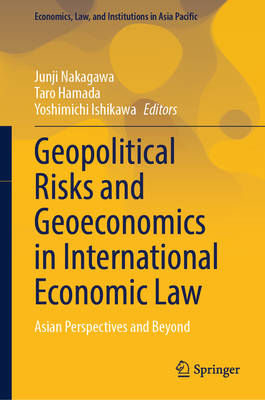
Geopolitical Risks and Geoeconomics in International Economic Law
Asian Perspectives and Beyond
€ 305,45
+ 610 punten
Omschrijving
The rules-based international economic order is undergoing profound transformation. Geopolitical risk and geoeconomic strategy are no longer external shocks to a stable system; they now shape the core of international economic law (IEL), influencing trade regulation, investment protection, digital governance, and supply-chain design. Tariffs, sanctions, investment screening, data controls, and security-driven regulation have become structural features of the global economy. This edited volume originates from the 9th Asian International Economic Law Network (AIELN) Conference, held in Tokyo in June 2025 under the theme "Geopolitical Risks and Geoeconomics in International Economic Law: Asian Perspectives and Beyond." It brings together scholars, practitioners, and policymakers to examine how IEL is responding to persistent geopolitical uncertainty and regulatory risk. The chapters analyze how legal frameworks allocate the costs of geopolitical and regulatory risk, whether the liberal trading system is fragmenting into regional or minilateral arrangements, and how security, resilience, and sustainability are reshaping market access and investment governance. A central question is whether international economic law can adapt to these pressures without abandoning rule-based multilateralism. Placing Asia at the center of the analysis, the volume explores whether Asian states can move beyond being objects of great-power strategies and instead act as norm entrepreneurs shaping the future of international economic law.
Specificaties
Betrokkenen
- Uitgeverij:
Inhoud
- Aantal bladzijden:
- 394
- Taal:
- Engels
- Reeks:
Eigenschappen
- Productcode (EAN):
- 9789819569953
- Verschijningsdatum:
- 29/03/2026
- Uitvoering:
- Hardcover
- Formaat:
- Genaaid
- Afmetingen:
- 156 mm x 234 mm
- Gewicht:
- 752 g

Alleen bij Standaard Boekhandel
+ 610 punten op je klantenkaart van Standaard Boekhandel
Cadeau

AANGERADEN


Beoordelingen
We publiceren alleen reviews die voldoen aan de voorwaarden voor reviews. Bekijk onze voorwaarden voor reviews.