


- Afhalen na 1 uur in een winkel met voorraad
- Gratis thuislevering in België vanaf € 30
- Ruim aanbod met 7 miljoen producten
- Afhalen na 1 uur in een winkel met voorraad
- Gratis thuislevering in België vanaf € 30
- Ruim aanbod met 7 miljoen producten





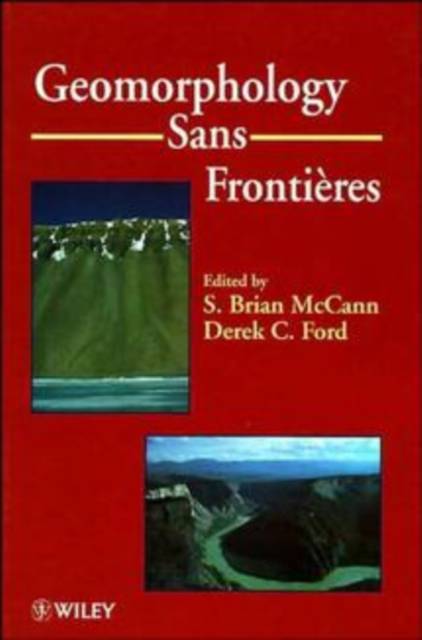
Geomorphology Sans Frontieres
€ 671,95
+ 1343 punten
Omschrijving
The founding president of the International Association of Geomorphologists, Denys Brunsden, outlines in the opening chapter ten responsibilities for geomorphologists in today s world. In the "Great Debate" which follows, a distinguished international panel (Baker, USA; Bremer, Germany; Slaymaker, Canada; Tricart, France; Twidale, Australia; Yatsu, Japan; and Brunsden himself) debate the ten principles of geomorphology propounded by Brunsden in 1982 as a framework for the development of the subject. The second part of the volume consists of five review essays which were presented as plenary addresses by leading Canadian and international geomorphologists. Frank Ahnert evaluates the role of modelling in geomorphology, focusing on process response models and their design, and makes a plea for simplicity in the face of complexity. Yoko Ota draws attention to plate tectonic processes in her authoritative review of coral reef terrace sequences around the northern Pacific. Anders Rapp, a Scandinavian mountain geomorphologist, adds new insights to our understanding of the destruction and preservation of ancient surface forms in alpine zones. Many of Rapp s themes are also considered by Derek Ford in his essay concerning the impact of glacial and periglacial processes upon the karst landscapes and groundwater systems of Canada. In the concluding essay, John Shaw presents an exciting and imaginative new interpretation of Canada s glacial landscapes and the role of giant meltwater floods. There is an underlying theme in this volume of the need for professionalism within the discipline and for a wide dissemination of findings, especially applied work, directed particularly to the developing world.
Specificaties
Betrokkenen
- Uitgeverij:
Inhoud
- Aantal bladzijden:
- 260
- Taal:
- Engels
- Reeks:
- Reeksnummer:
- nr. 5
Eigenschappen
- Productcode (EAN):
- 9780471966005
- Verschijningsdatum:
- 10/09/1996
- Uitvoering:
- Hardcover
- Formaat:
- Genaaid
- Afmetingen:
- 442 mm x 633 mm
- Gewicht:
- 648 g

Alleen bij Standaard Boekhandel
+ 1343 punten op je klantenkaart van Standaard Boekhandel

Beoordelingen
We publiceren alleen reviews die voldoen aan de voorwaarden voor reviews. Bekijk onze voorwaarden voor reviews.